
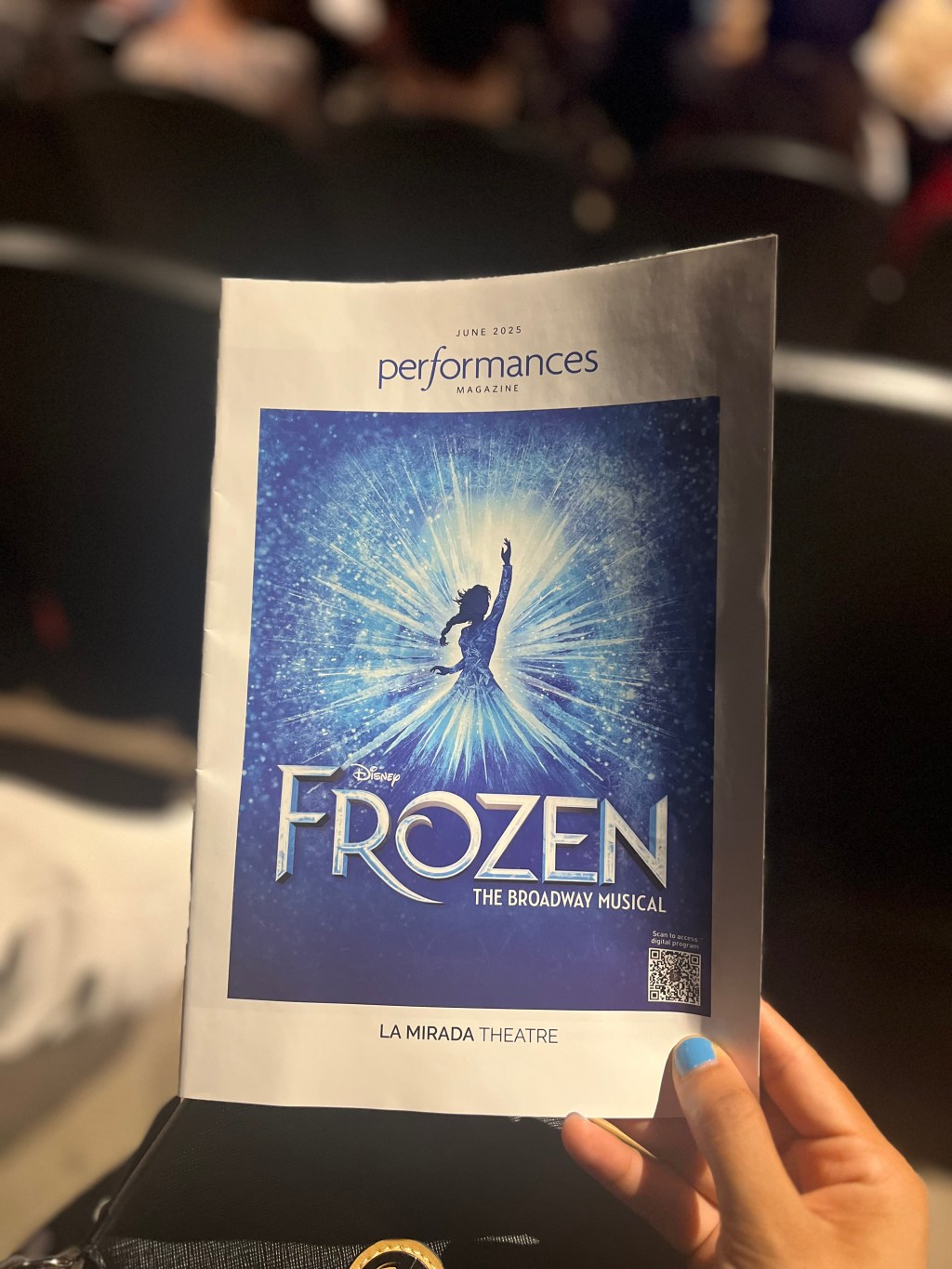
Frozen: The Broadway Musical
McCoy Rigby Entertainment / La Mirada Performing Arts Theater
Director: Dan Knechtges
Choreographer: Dan Knechtges
Run Time: 2 Hours and 15 Minutes
Review & Photo Credits by Destiny Lynn
Frozen: A Movie or a Musical?
How do you adapt a $1.2 billion animated film into a compelling stage production? A simple live-action version plays it safe but questions the necessity of the project. Or, an adaptation that extends beyond the warm snowman to understand more about the characters. While the atmosphere was chilly, La Mirada Theater brought a hot but bizarre performance of Frozen: The Broadway Musical. Aligning with the major plot and songs from the 2013 Disney hit film, the production offered a visually ambitious but emotionally uneven take on the beloved movie.
Under the direction and choreography of Dan Knechtges, the production adheres closely to the original plot and score while layering new songs and dramatic depth. The result is a darker, serious version of the family story that experiences the magic but often feels disconnected from the emotional heart of the film.
Aligning with the film’s major plotline, the Broadway musical version takes place in Arendelle, with two inseparable sisters, Anna and Elsa, who lose their bond in early childhood due to the fear of what Elsa’s power could unleash. After unfortunate events at Elsa’s coronation, trouble brews throughout the kingdom as Arendelle slowly freezes over. Anna, therefore, searches for her sister in hopes of returning her to the kingdom and meets new friends along the way.
A Video Wall That Takes the Audience Throughout Arendelle
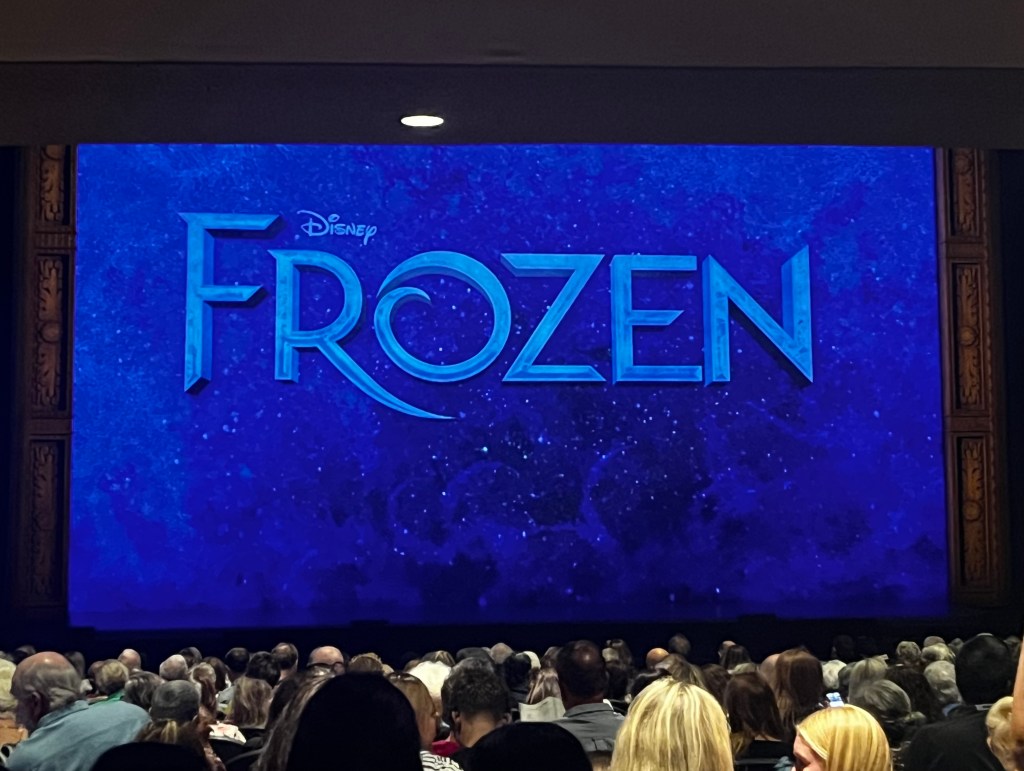

From the moment the audience entered the auditorium, the magic of Arendelle came to life. Tim Mackabee and his design team (costume, lighting, and projection) deserved special accolades for transforming the stage into a winter wonderland. A high-resolution video wall served as the production’s visual backbone, simulating snowfall before the opening scene and guiding transitions across landscapes such as Elsa’s ice palace, the snowy mountains, and the castle interiors/exteriors. This design element expanded the stage’s perceived space and enhanced the story’s pacing with cinematic flow.
Throughout the show, the audience experienced quick costume changes, which required strong collaboration among actors, costume designers, and the director for seamless transitions. One notable design moment occurred during “Let it Go,” when Elsa (played by Jenna Lea Rosen) underwent a seamless costume transformation mid-song. In a single, fluid motion, her coronation gown changed into the iconic ice dress–eliciting audible gasps from children and adults alike. This moment, timed perfectly with Rosen’s vocal climax, embodied the illusion of magic.
Equally memorable was the use of puppetry and costume changes in portraying Olaf. Actor Mark Ivy manipulated a three-part puppet to mimic Olaf’s bouncy, disjointed body. The quick transitions required to imagine Olaf tossed around in the snow were executed with energy and comedic precision, bringing warmth and humor to the production.
Mixed Acting & Characterization
While mesmerized by the technical design elements, the acting and vocal performances were inconsistent, particularly among the lead roles in the first act.
Cailen Fu (Anna) delivered a vibrant, grounded portrayal of the younger sister. Her quirky optimism, impulsive nature, and desire for connection were expressed with warmth through dialogue and song. Likewise, Mark Ivy brought Olaf to life with near-perfect vocal mimicry of the original film’s portrayal and engaging comedic relief.
Jenna Lea Rosen (Elsa) demonstrated impressive vocal control, particularly in the challenging “Let it Go.” Her early scenes demonstrated Elsa’s fear and reservations quite well. However, Rosen’s overall emotional arc felt underdeveloped. The stamina came through vocally, but her performance often lacked the emotional depth needed to fully relate to the scene, particularly in the newer songs written to deepen her character.
Garrett Clayton (Hans) also offered mixed results. He delivered his dialogue with poise and confidence that commanded the stage; however, his vocals lacked emotional variety. In “Love is an Open Door,” a pivotal song in establishing his charm, the singing fell flat–undercutting the dramatic irony needed for the later plot twist.
A Musical Torn Between Two Identities
The deeper issue, however, lies in the musical’s shift in tone and identity. In attempting to expand the storyline, the stage adaptation introduces numerous new songs designed to explore characters’ internal struggles. While this choice aims to add nuance–especially for Elsa–it sometimes backfires.
The new material repeatedly portrays Elsa in a state of constant fear and self-doubt, overshadowing the confident and empowered image popularized by the original film. The result is a version of Frozen that feels heavier and ultimately slower in pacing. The fun and familiar songs of “Do You Want to Build a Snowman?” and “Fixer Upper” are diluted by the weight of darker, introspective solos that do not always advance the narrative.
Themes and Takeaways
Despite shifts in tone, the show retained its core messages of discovering the meaning of love, the search for identity, and the courage to overcome fear.
Elsa’s journey revealed a woman afraid to let go of her past to one who learns to accept herself. Initially concealing her powers to protect others, Elsa discovered her strength through isolation and reconciliation. Anna’s arc, meanwhile, transformed her understanding of love–from naïve infatuation with Hans to selfless devotion to her sister. In the show’s emotional climax, Anna sacrifices herself for Elsa, which redefined the idea that true love was familial, not romantic.
Small but powerful scenes, such as the brief appearances of young Anna and Elsa, completed the emotional heart of the story. Their flashbacks offered glimpses of their childhood bond and reminded the audience of the stakes in their separation and reunion.
Should You Return to Arendelle?
Overall, Frozen: The Broadway Musical captures a family-friendly audience by recreating magic onstage for many to enjoy. Younger audiences will celebrate the snowfall effects in the auditorium while watching Elsa use her magic to construct Olaf and her ice palace. Those familiar with the film’s debut will have an easy time following along to the Broadway adaptation, whilst appreciating additional music that attempts to create depth for the lead cast. However, those hoping for the same energy and balance of heart and humor found in the film may find the adaptation’s tone and pacing less satisfying. Still, for many, the journey back to Arendelle is worth the magic and enduring story of sisterhood and self-discovery.
Destiny Lynn is a writer and reviewer with a passion for exploring the intersection of history, identity, and storytelling through musical theatre and novels adapted to screen.
 Book-in-Motion
You must be logged in to post a comment.