
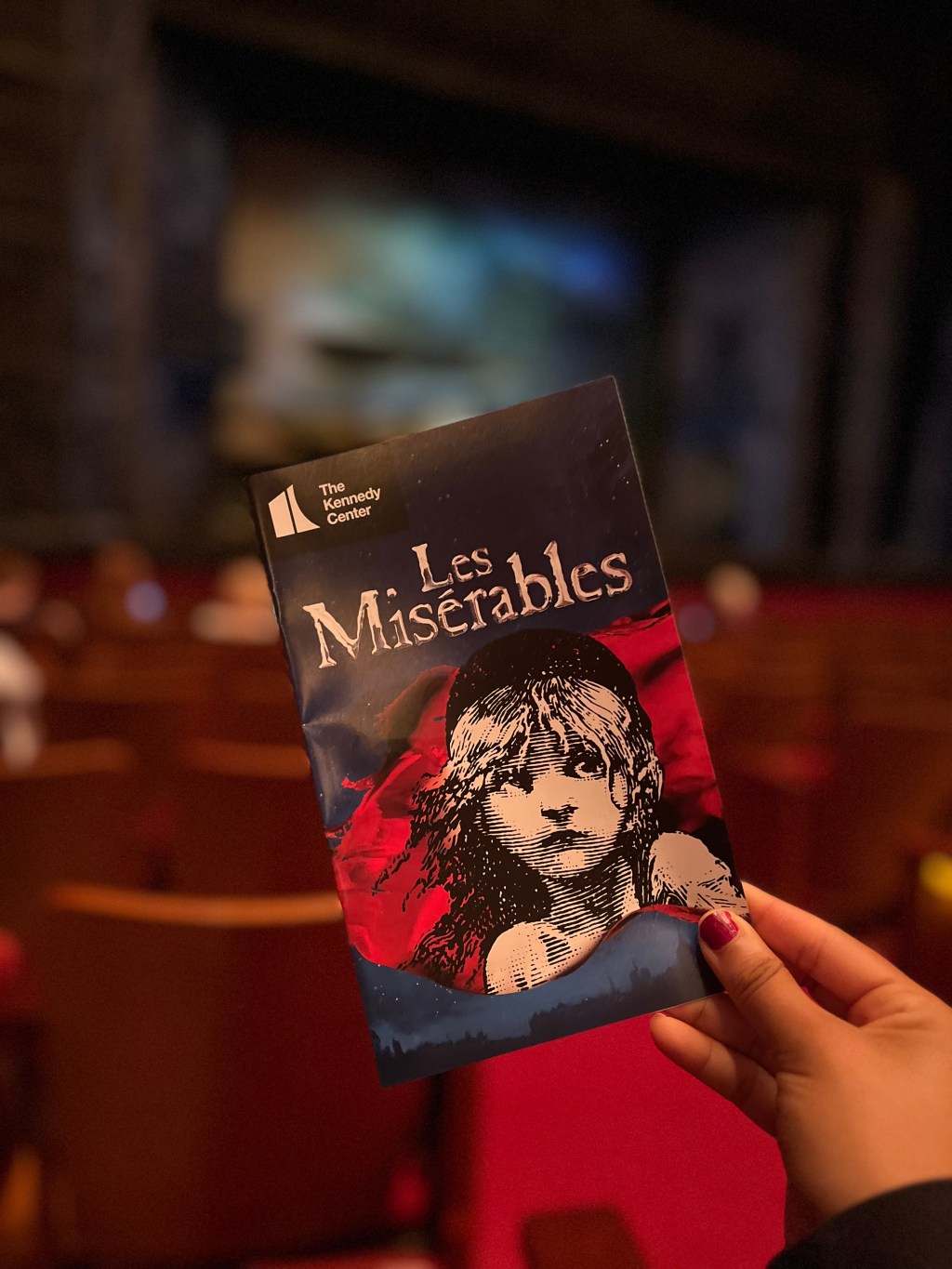
Les Misérables: Musical Review
North American Tour / The John F. Kennedy Center for the Performing Arts
Directors: Laurence Connor and James Powell
Musical Stager: Geoffrey Garratt
Run Time: 3 Hours + 15 Minute Intermission
Review & Photo Credits by Destiny Lynn
A Tour de Force
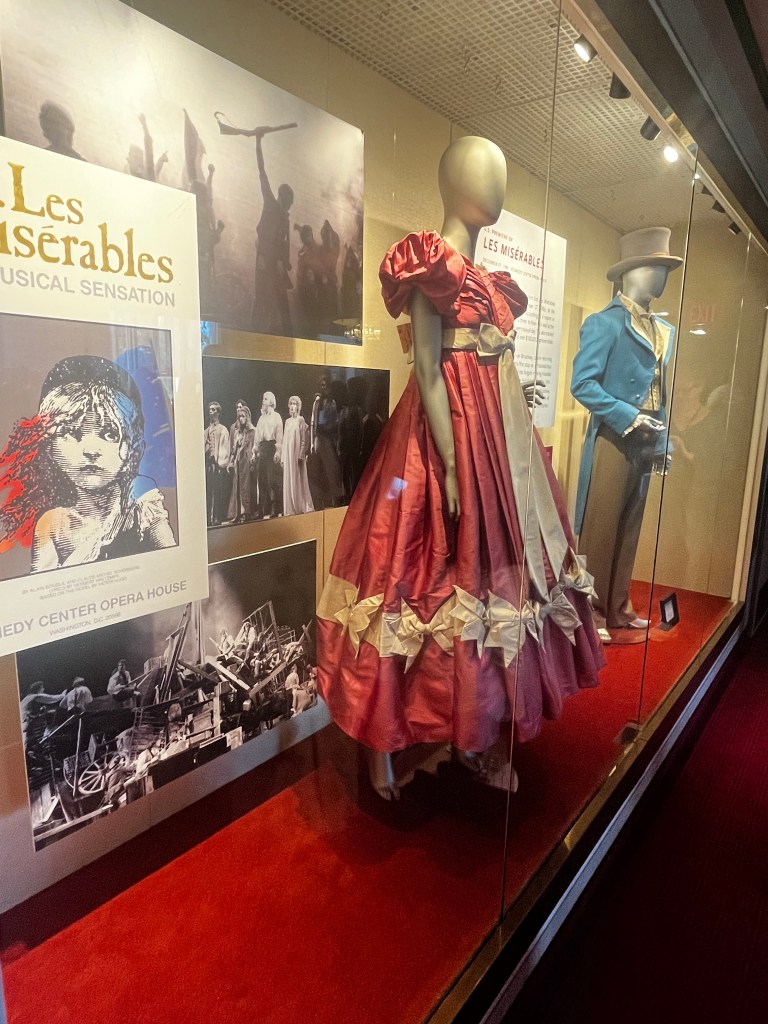
At the end of the day, what would you be willing to sacrifice for the sake of love and redemption in a world that is not always fair? Concluding the 2024-2025 season, the John F. Kennedy Center for the Performing Arts delivered a tour de force production of Les Misérables–a fitting tribute to the venue’s legacy of artistic excellence. Presented in the Opera House, acclaimed for awarding medals of honor to artists who dedicated their lives to the arts, this performance brought the classic full circle. Since its pre-Broadway run at the Kennedy Center in 1986, Les Misérables has become one of the longest-running musicals in history, performing in over 53 countries, 22 languages, and seen by over 130 million viewers! Under the North American Tour, directors Laurence Connor and James Powell delivered a faithful, yet emotional, nuanced retelling of Jean Valjean’s journey, fully immersing audiences in a story carried by the people.
Set in the aftermath of the French Revolution, Les Misérables examined the fictional story of Jean Valjean, a former convict seeking redemption. Haunted by his past, Valjean constructed a new life defined by morality and sacrifice, even if it meant exposing his full identity. Meanwhile, his journey was situated within a heated political climate of young, angry French intellectuals who were determined to fight for justice, regardless of the cost.
“Do You HEAR the People Sing?”
Told almost entirely through music, Les Misérables demanded a cast who could skillfully and genuinely express their character through song.
Nick Cartell, reprising his role of Jean Valjean, gave a commanding performance across the character’s life span. Through intense vocals in “Valjean’s Soliloquy,” Cartell conveyed the anger of a man branded an outlaw for committing a desperate act. As the show progressed, that rage softened into redemption and acceptance. In his final scene, Cartell’s vocal restraint and emotional depth portrayed a life of sacrifice and morality. Ultimately, his nuanced delivery at each stage of Valjean’s life made for a layered character development.
Nick Rehberger (Javert) delivered an authentic representation of the rigid inspector intent on upholding the law. Often a polarizing character, depending on the actor’s portrayal, Rehberger offered a grounded intensity to his role. His well-placed pauses revealed the internal turmoil of a man conflicted between his moral code and human empathy. The tension between duty and doubt makes for an interesting discussion on whether he was the story’s protagonist or antagonist.
Matt Crowle (Monsieur Thénardier) and Victoria Huston-Elem (Madame Thénardier) created a strong duo performance while delivering the comedic relief throughout the tragic narrative. As scheming innkeepers driven by greed, the duo made a memorable impression without undercutting the story’s seriousness. In “Master of the House,” their exaggerated mannerisms, vocal choices, and clever maneuvers reflected their characters’ status in the show. Their occasional reappearances throughout the show served as a comedic modern “Forrest Gump.”
Do You SEE the People Sing: Direction and Design
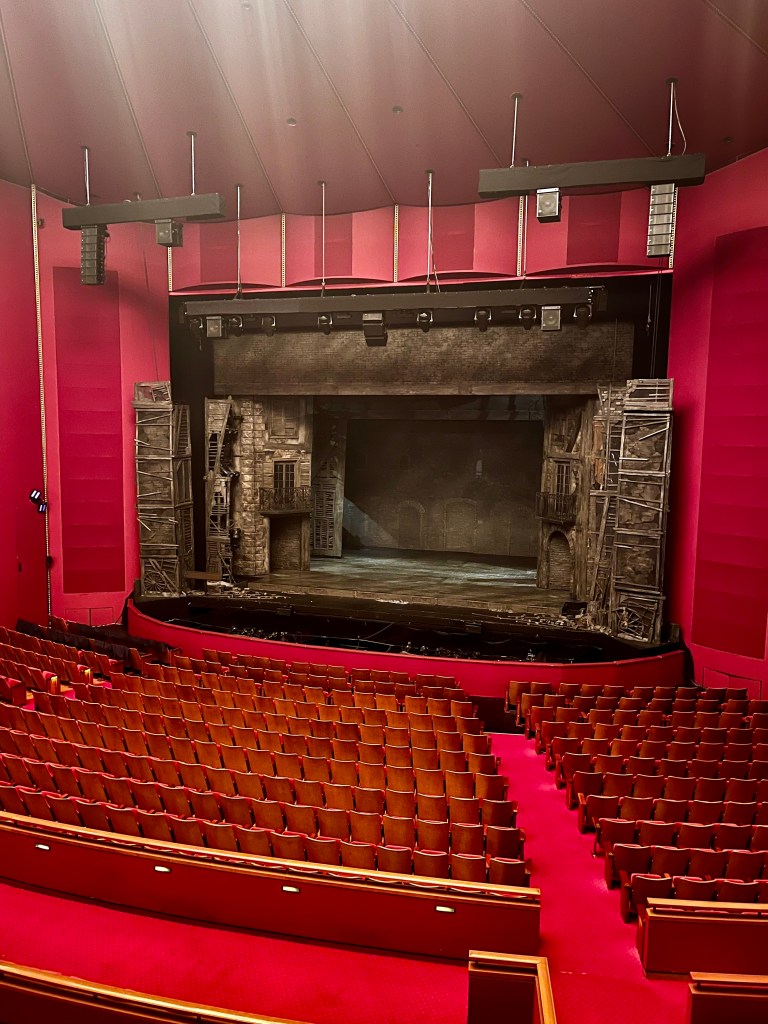
From the immersive set to historically inspired costumes, the production’s design elements elevated the storytelling of a struggling France.
Matt Kinley’s scenic design captured the somber tone of post-revolutionary France with fark, decaying exteriors and richly detailed interiors. The opening shipyard, church, and barricade all evoked despair and resistance. In conjunction with Paule Constable, the lighting design enhanced this modd, especially during battle scenes, where flashes of light mimicked flying bullets and death. Rather than leaning into choreography-heavy combat, the direction allowed lighting and emotional responses to drive the action. Notably, the death of Gavroche–his back turned to the audience–centered the performers’ stunned reactions over the violence iteself.
Meanwhile, Andreane Neofitou’s costume design accurately reflected 19th-century France with period-appropriate dresses, trousers, waistcoats, and tailcoats. While distinguishing among the classes, additional attention could have helped distinguished key revolutionaries like Jake David Smith (Marius) and Christian Mark Gibbs (Enjolras), who easily blended into one another. Despite their strong performances, their similarities in costume and delivery made it difficult to fully separate the characters. A more distinct stylistic approach–through wardrobe or delivery–could have sharpened their character identities.
“Red: The Color of Desire / Black: The Color of Despair”
As historical fiction, Les Misérables explores love, redemption, and an endless pursuit to challenge injustice.
Love is portrayed in many forms, from romantic, spiritual, and self-serving. Religion quietly shapes Valjean’s transformation; without the priests’ mercy early on, his story would have ended before it began. Romantic love emerges between Cosette and Marius, though it leans more toward infatuation. In contrast, Eponine’s love for Marius is deeply selfless but unreciprocated. Meanwhile, the Thenárdiers embodied a twisted form of love driven by greed and survival, exploiting others in their pursuit of upward mobility.
Jean Valjean’s life is marked by redemption. Initially bitter and spiteful toward the world that branded him ‘24601,’ Valjean chose integrity and morality time and again by confessing his identity to save another man from wrongful imprisonment, honoring a promise to Fantine by raising Cosette, and sparing Javert’s life despite the endless pursuit. His redemption is hard-earned and culminated in peace and release.
Finally, injustice takes center stage. Valjean sought out a moral life while burdened by a system that refused to forget his past. Javert, driven by duty, became a tragic symbol of the law’s inflexibility. Act II shifted towards a collective struggle of French intellectuals, whose passionate revolutionary efforts reflected society’s demand for change. The show’s message–of personal and political resistance–remains strikingly relevant.
“Finale: ‘Les Misérables”’
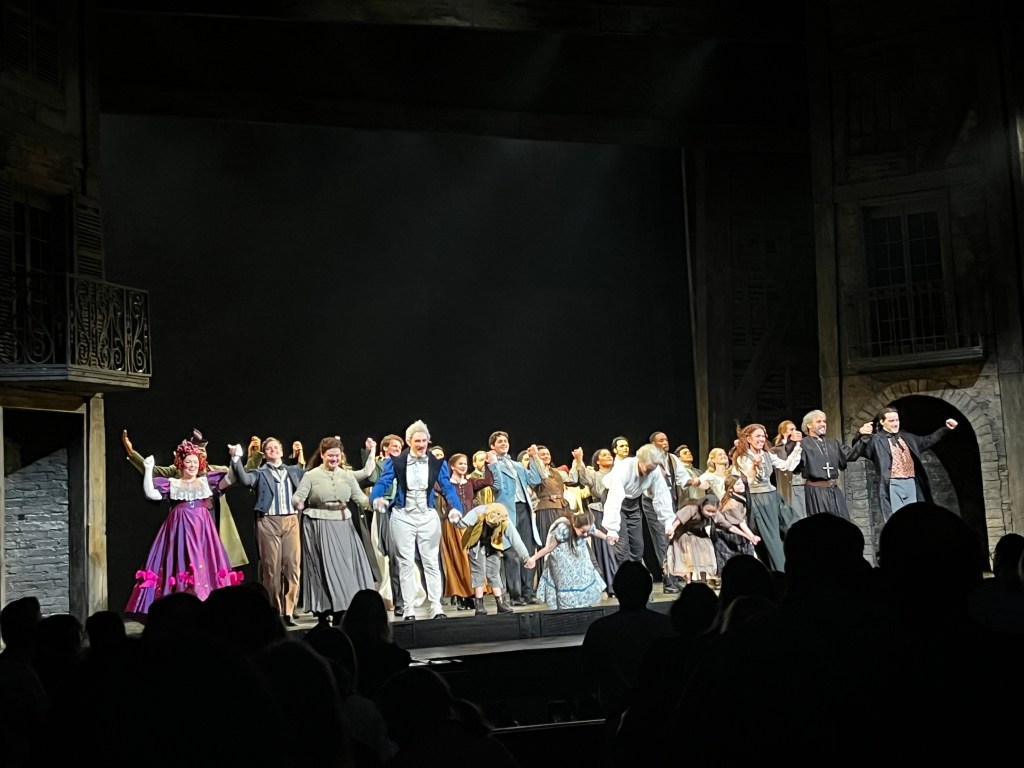
Les Misérables is a timeless classic that requires no modernization to remain compelling. This touring production honored its legacy while showcasing exceptional talent, thoughtful direction, and emotionally resonant design. Whether you are a seasoned theatergoer, a history lover, or a classical music enthusiast, this rendition offers a powerful and enduring experience for mature audiences.
As audiences today continue to grapple with inequality and injustice, Les Misérables reminds us that stories of hope and resilience are always worth telling.
Destiny Lynn is a writer and reviewer with a passion for exploring the intersection of history, identity, and storytelling through musical theatre and novels adapted to screen.
 Book-in-Motion
You must be logged in to post a comment.