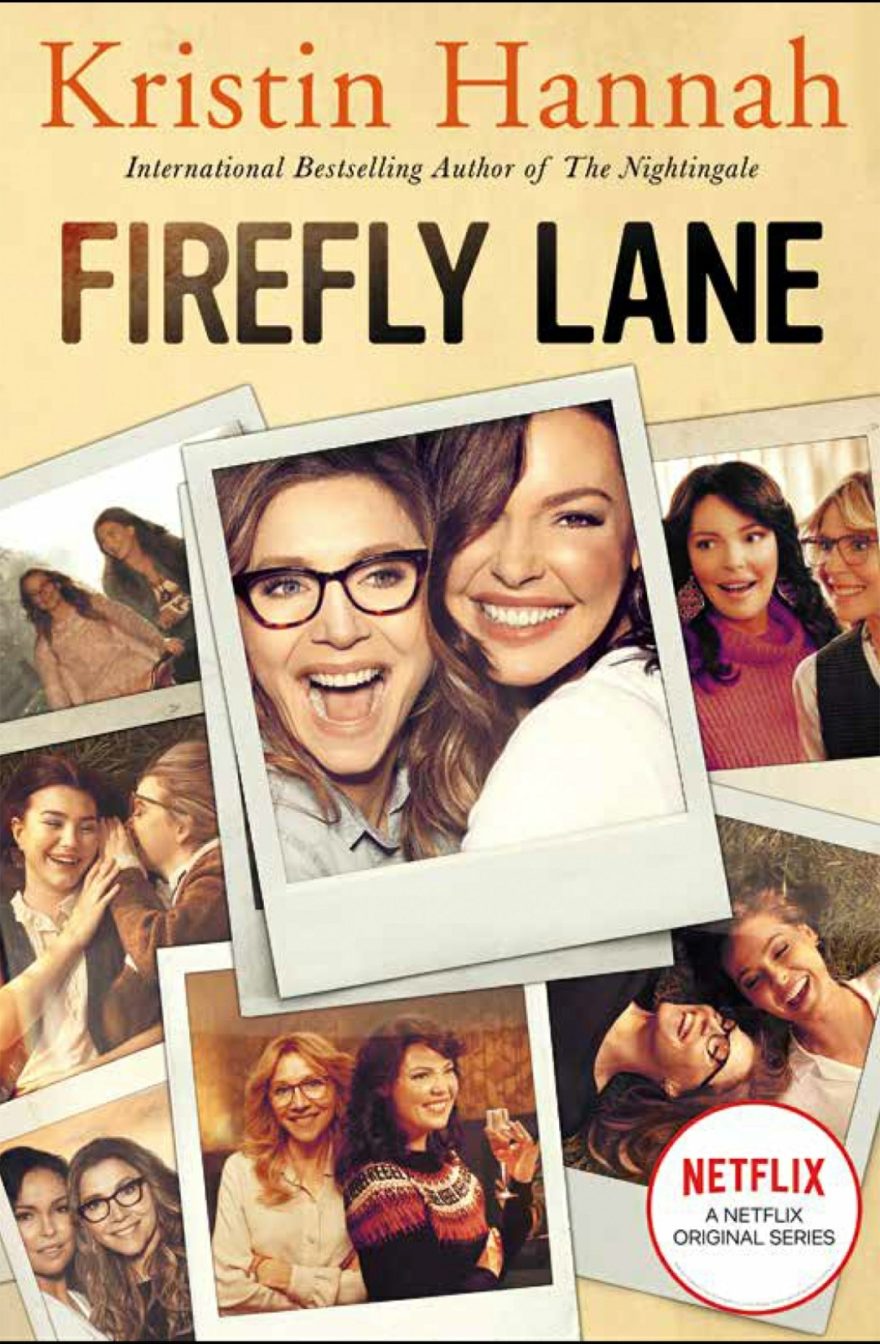
Written: Feb 5, 2008 | Adapted: Feb 5, 2021
Pages: 479 | Format: Paperback
Genre: Historical Fiction, Coming of Age
Price: $9.99 Kindle | $9.42 Paperback
Overall Rating:

Quick Takeaways
Kristin Hannah’s Firefly Lane is less a story of two women than of three decades, where friendship and silence become as defining as ambition and love. Netflix’s 2021 adaptation attempts to capture that sweep, but the translation from page to screen comes with trade-offs.
🌟Almost 500 Pages!
Don’t be intimidated; the chapters are short and organized by decade to make the pacing fly by.
🌟“TullyandKate” OR “Tully and Kate”?
The bond feels inseparable, but Kristin Hannah wisely lets them grow into their own identities.
🌟Johnny Ryan Drives Me Nuts!!!
Talk about a couple to throuple. In the book, Kate comes off naïve, Tully breaks girl code, and Johnny…well, you decide.
🌟Much is Left Unsaid Between Tully and Kate
For two women who love each other like sisters, silence often drives the drama more than words in the book.
🌟Cliffhanger at the End; Find Out More in Fly Away
**SPOILER** The ending is heartbreaking. Hannah ties a bow on this story, but you will want to continue with the sequel, Fly Away, to find out what happens with some minor characters.
Scroll down for the full review and Book-to-Screen comparison.
Firefly Lane: Kristin Hannah’s Novel and Its Netflix Adaptation
Written: Feb 5, 2008 | Adapted: Feb 5, 2021
Pages: 479 | Runtime: Two Seasons – 10 Episodes Each
Genre: Historical Fiction, Coming of Age
Read / Watch Order: I read the book first, then watched the series. The novel set the emotional foundation, while the show reimagined it.
Book Review
Kristin Hannah’s Firefly Lane follows the unlikely friendship between Tully Hart and Kate Mularkey, beginning in 1974 and spanning four decades. Tully is ambitious and glamorous, striving for a career in journalism; Kate is more grounded, navigating family life and personal growth. Together, they experience love, heartbreak, and the tension between loyalty and individuality.
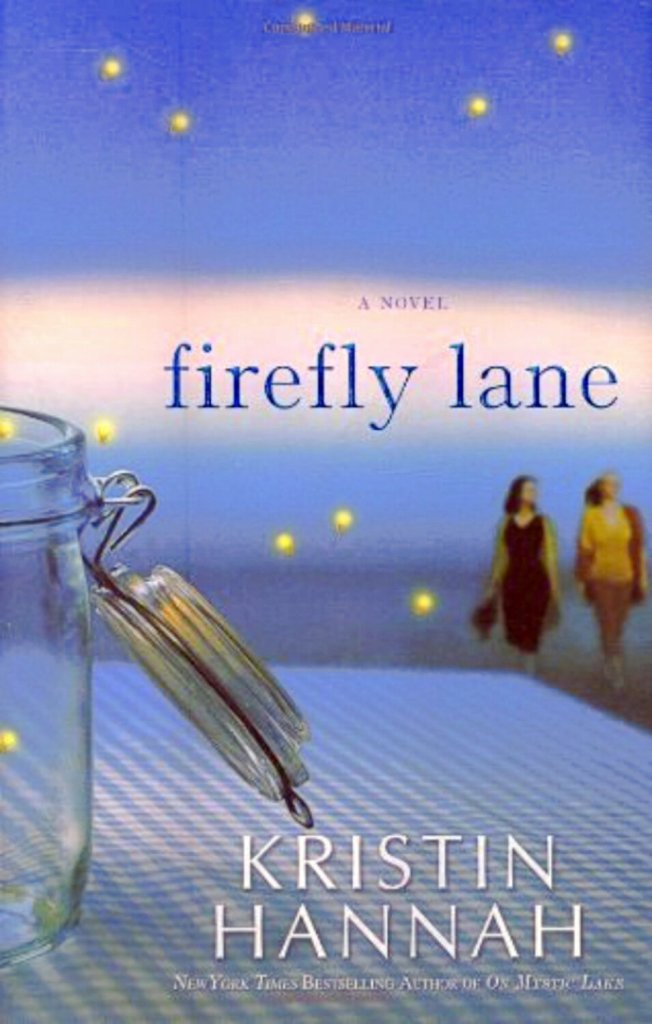
Hannah organizes the novel by decade, allowing readers to witness milestones in education, careers, and relationships. The narrative captures both the joys and conflicts that define a lifelong friendship. I was particularly drawn to how Tully and Kate pursue separate paths yet remain intertwined, offering a believable portrayal of friendship evolving over time.
The book’s strength lies in character depth. Tully’s confident exterior masks vulnerability, while Kate’s steady demeanor belies moments of quiet frustration. Minor characters, especially Johnny Ryan, create tension that tests their bond, though at times his role feels slightly overemphasized compared to the protagonists’ growth.
Themes & Audience: Firefly Lane combines historical fiction with coming-of-age elements, exploring adolescence, identity, mother-daughter relationships, and female friendship. Tully Hart is the girl many dream of becoming ; Kate Mularkey is the girl that many relate to. Younger readers will enjoy the nostalgic high school and early career experiences, while older readers will appreciate the reflection on long-term relationships and the cultural context of the ’70s–’90s.
Star Rating:
Adaptation Review
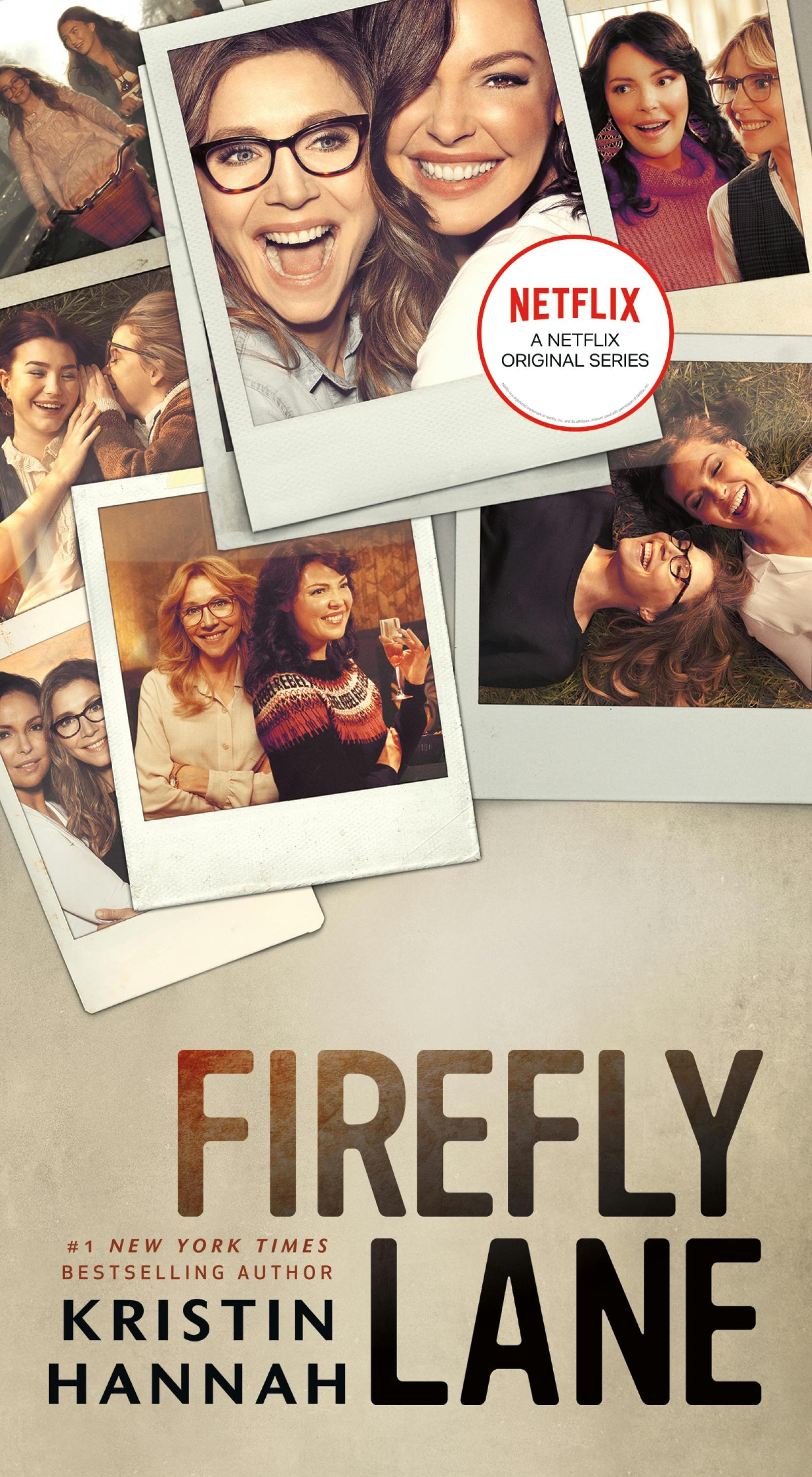
Netflix’s 2021 series captures the heart of Tully and Kate’s friendship but reshapes the narrative. The show, led by Katherine Heigl and Sarah Chalke, uses non-linear storytelling by weaving flashbacks with present-day drama to increase suspense and nostalgia. While this structure keeps viewers engaged, it occasionally fragments character arcs and softens subtler emotional beats from the novel. Where Hannah’s novel organizes time by decade, the show embraces cliffhangers and soap-opera pacing — a choice that keeps viewers bingeing but sometimes flattens the subtler moments of disagreement and reconciliation that define the novel.
Performance & Casting: Katherine Heigl captures Tully’s charisma with underlying vulnerability, while Sarah Chalke grounds Kate with warmth. Their chemistry drives the series, though secondary characters are less nuanced. Both leads stepped out of their comfort zones to prepare for their roles. In particular, Katherine Heigl, stated that she is actually more like Kate in real life.
Visuals, Sound, Mood: The series thrives on nostalgia: feathered hair, mixtapes, shoulder pads, and a soundtrack stacked with hits. With unnecessary help from CGI to make the leads appear in their twenties, thirties, and forties, the series provided a glossy, sometimes melodramatic, performance.
Star Rating:
Page to Screen Comparison
Faithfulness to the Source: The show retains the core, inseperable bond and intensity of “TullyandKate.” Their shared history, high-school awkwardness, and early career struggles mirror the book’s emotional spine. Within this bond, minor details that surround their upbringing are fully displayed on screen to reveal major characteristics of the time period.
Where the Adaptation Departed: The series simplifies some romantic entanglements, reducing Johnny Ryan’s ambiguous role to a more conventional couple dynamic. However, there is one major departure from the book between Johnny Ryan and Kate Mularkey that was integral in the series. The series’s approach to their dynamic created a new twist that begs additional questions of what led to that moment; though reading the book provides speculations.
What was Lost; What was Gained: Hannah’s novel often lingers on what is unsaid between Tully and Kate, allowing silence to serve as both tenderness and tension. The adaptation, constrained by dialogue-driven television, makes these conflicts more overt, reducing some of the suspense in their inevitable fracture.
Meanwhile, the show’s visual language — its soundtrack, period costumes, and jump-cut timelines — offers an immediacy the book can’t. Nostalgia becomes a character of its own, appealing to audiences who lived through the decades depicted.
Adaptation Fidelity Rating:
And That's A Wrap!
Hannah’s novel is immersive and emotionally layered, rewarding readers with a long view of friendship’s durability and fragility. Netflix’s adaptation, while compelling in its own right, feels designed for immediacy rather than depth. For those seeking a reflective exploration of identity, the book remains essential. The series, though imperfect, succeeds as a cultural echo — not a replacement — of Hannah’s original work.
Recommendation: For a reflective exploration of friendship and identity within a historical approach, read the book first. The series works well for those seeking a visual, episodic companion that captures the story’s emotional highlights.
Reader’s Note: Did Netflix capture the essence of Firefly Lane, or did it trade nuance for drama?
 Book-in-Motion
You must be logged in to post a comment.