Written: 1982 | Adapted: 1987, 2025
Pages: 345 | Format: Paperback
Genre: Thriller, Dystopian
Price: $9.99 Kindle | $13.48 Paperback
Overall Rating:
Quick Takeaways:
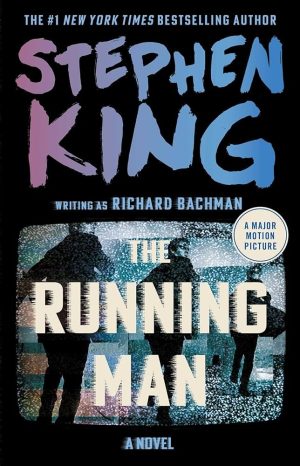
Stephen King’s The Running Man was a chilling dystopian thriller that imagined a world where entertainment and survival collided. Instead of ancient gladiator-style entertainment, the government turned death into a spectacle through a deadly game show promising riches to anyone who could stay alive long enough to win.
Introducing Ben Richards, a poor, stubborn man blacklisted from work, who risked everything to provide for his wife and sick child. Selected as a contestant on The Running Man, Richards needed to evade trained assassins and the watching eyes of a society eager to turn him in for a reward. Richards prize? One billion dollars, if he could live for 30 days. However, no one has ever made it past the 8th day. As the only free channel to exist, everyone tuned in to witness Richards rely on his resources to travel across the United States, while staying close to “his people.”
🌟1982 Book Written About 2025. Was Stephen King Correct?
Stephen King’s dystopian future eerily mirrors today’s world. Set in 2025, his society is divided between the rich and the growing class of unemployed citizens. Desperation drove people to the FreeVee network, where contestants volunteered for dangerous and lethal games in exchange for money. The media distorted their image, censored interviews, and portrayed them as villains as a haunting reminder of the power of propaganda.
🌟Ben Richards: Arrogant, Desperate, Resourceful
Ben Richards began and ended as a man with nothing to lose. However, King skillfully evolved him into a reluctant hero fighting for more than money. Beneath his arrogance was a loyal, intelligent, and fierce will to survive.
🌟 Hunger Games Meet Squid Games
If Hunger Games offered a tamed version of sacrifice and Squid Games embraced its brutality in a game-style format, The Running Man stood as a happy medium.
🌟The Countdown That Felt Flat
King structured the novel into 100 chapters that counted down from “Minus 100” to “Minus 0.” The device aimed to heighten urgency but never connected meaningfully to the plot’s timeline. While the countdown built surface tension, it lacked correlation to time, distance, or story milestones that dulled its impact. By the time “Zero” arrived, the climax was prolonged rather than explosive.
🌟A Classic Dystopian Ending
The finale delivered the hallmarks of dystopian fiction: hope, tragedy, and ambiguity. Without spoilers, King’s ending was powerful but unlikely to survive in Hollywood form.
Scroll down for the full review and Book-to-Screen comparison.
The Running Man: Full Review
Written: 1982 | Adapted: 1987, 2025
Pages: 345 | Runtime: 1987: 1 Hour, 47 Minutes; 2025: 2 Hours, 13 Minutes
Genre: Literature, Fantasy, Parallel Fiction
Read/Watch Order: I read the book, then watched the film. The 2025 film adaptation is scheduled for November 7, 2025.
Rating:
Book Review
“You symbolize all the fears of this dark and broken time.” –The Running Man, p. 72
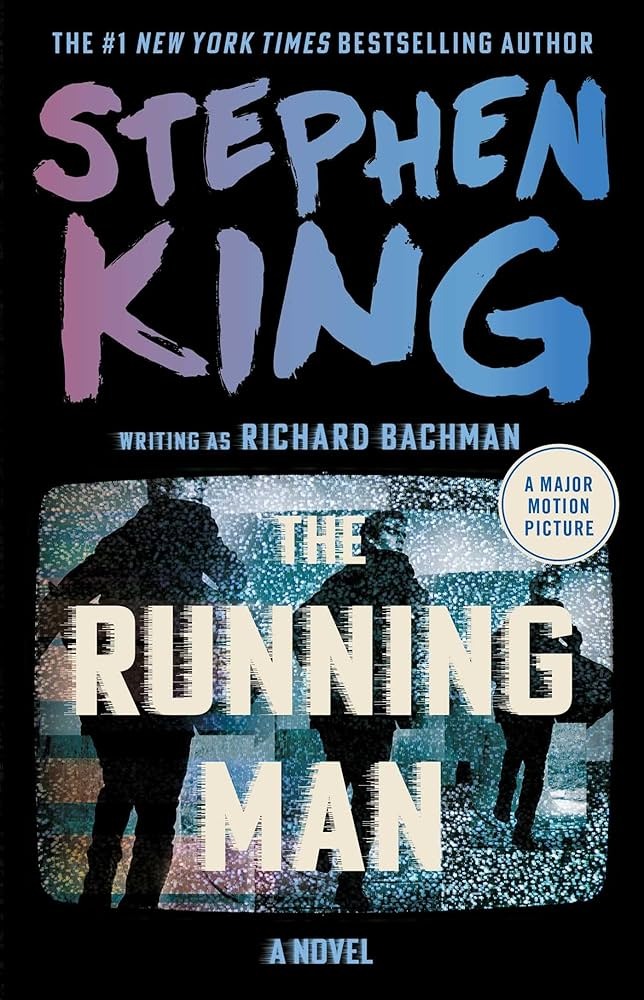
Stephen King’s The Running Man was a chilling dystopian thriller that imagined a world where entertainment and survival collided. Instead of ancient gladiator-style entertainment, the government turned death into a spectacle through a deadly game show promising riches to anyone who could stay alive long enough to win.
Introducing Ben Richards, a poor, stubborn man blacklisted from work, who risked everything to provide for his wife and sick child, King excelled at developing the main character. Selected as a contestant on The Running Man, Richards needed to evade trained assassins and the watching eyes of a society eager to turn him in for a reward. Richards prize? One billion dollars, if he could live for 30 days. However, no one has ever made it past the 8th day. As the only free channel to exist, everyone tuned in to witness Richards rely on his resources to travel across the United States, while staying close to “his people.” Through an imagined society in 2025, King envisioned a society plagued by media control, social and economic inequality, and quick schemes to get rich. By designing a primary game show that the government strictly controlled, propaganda flooded the airways, which indirectly removed those seen as undesirable by criminalizing their identity. His plot actively progressed, while building excitement on whether to love or hate the main character.
However, what made this novel timeless was its remarkable resemblance to the modern era. In a world where fame, misinformation, and survival blurred together, King foresaw the psychological toll of being “watched” and the lengths people go to escape economic despair. The language occasionally revealed its 1980s origins, but the themes felt frighteningly current.
Structurally, the novel stumbled slightly. The midsection lingered longer than necessary, and the resolution arrived earlier than expected, creating a drawn-out aftermath. As a way to create a sense of urgency, Stephen King organized exactly 100 chapters that counted down to zero. Minus 100 and Counting…Minus 99 and Counting…Minus 98 and Counting…Minus 0 and Counting. The Running Man delivered a clear ending; however, the impact was lost by the time zero approached because there was no direct purpose behind the countdown. While having each chapter descend from each other to provide urgency in the lead character, King could have channeled that anticipation alongside a metric such as days, hours, minutes, or the climax. By leaving the countdown generic, the purpose was lost besides signaling that the end of the book was near. Still, King’s sharp plotting and vivid chase sequences kept readers invested until the final, haunting twist.
Page to Screen Predictions: Will the Film Deliver?
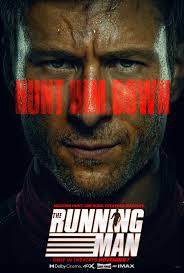
The original 1987 adaptation, starring Arnold Schwarzenegger, leaned heavily into action, losing much of King’s social critique. The upcoming 2025 version, directed by Edgar Wright, promises a return to the source material and a setting that matches the novel’s year: 2025.
With the new adaptation premiering in 2025, about a plot set in 2025, Director Edgar Wright is taking a factual approach to the storyline compared to its 1987 adaptation. However, the question remains about how faithful the director will be. Will Wright preserve King’s dystopian message, or modernize it into a commentary on digital fame and economic inequality?
Given Wright’s visual style and tendency towards action-packed dramas (think Baby Driver, Ant-Man, and Hot Fuzz), the action will be front and center in The Running Man. However, the ending will most likely diverge from the original plot line. The novel’s racially charged dialogue will also likely shift towards a broader discussion of class and corruption. Building Ben Richard’s character will likely combine his sarcastic but resourceful nature, as he desperately stays alive to send his sick daughter money. The story’s cross-country chase could also lend itself to stunning visual storytelling.
The Running Man remains a fast-paced, dystopian novel that feels alarmingly relevant in today’s media. King’s countdown organization faltered and the pacing wavered near the end. Yet his insight into class, propaganda, and survival was resourceful and enlightening. For readers who enjoy dystopian thrillers or want something similar to the Hunger Games or Squid Games, this is essential reading before the 2025 film premiers in theaters. If sources pan out, readers will be waiting to see how this action-packed story hits the screen for the second time: this time with more fidelity.
Destiny Lynn is a writer and reviewer with a passion for exploring the intersection of history, identity, and storytelling through musical theatre and novels adapted to screen.
 Book-in-Motion
You must be logged in to post a comment.