A Christmas Carol by Charles Dickens
Written: 1843 | Adapted (Film): 1983 (Disney), 1984 (George C. Scott)
Pages: 125 | Format: Paperback
Genre: Literature, Fantasy
Price: $3.99 Paperback
Overall Rating:
Quick Takeaways:
Jacob Marley was dead…seven years dead, in fact. His business partner, Ebenezer Scrooge, was alive, but not exactly thriving in spirit, unless money was involved. Ambitious even during the holidays, four ghosts disrupted Scrooge’s Christmas Eve, Marley among them. First published in 1843, A Christmas Carol rescued Charles Dickens’ career and reshaped how generations would come to understand generosity, community, and redemption during the holiday season. Turning into a classic holiday novella, Ebenezer Scrooge forcibly confronted his past, present, and future and the consequences of his decisions.
🌟What is the Meaning of Christmas?
Dickens reframed the holiday away from materialism and toward experience: Connection, generosity, and the radical act of noticing one another.
🌟Ebenezer Scrooge: Hero, Villain, or Something Complicated?
We tend to remember Scrooge as the grumpy character who remarks “bah, humbug” in every Christmas conversation. Upon close examination, the book was less about punishing Scrooge than interrogating the capitalist world that helped created him in Victorian society.
🌟Ghost of Christmas Past, Present, and Yet to Come
The ghosts Scrooge encountered propelled the story, but more importantly, exposed the moral consequences of Scrooge’s choices.
🌟 What happened to Marley?
Marley’s death hung over the story like a warning bell. Even in absence, he was present. As the ghost who “began it all,” Marley became the cautionary tale and reminder. Greed may preserve fortune, but it corrodes the soul.
🌟Why A Christmas Carol?
Instead of typical chapters, Dickens intentionally organized his book around musical staves as a symbolic reminder to return to the book’s themes each Christmas. Similar to the classic holiday songs sung on the radio, filmmakers and theatres have continued reimagining A Christmas Carol on stage and screen long after Dickens’ death.
Scroll down for the full review and Book-to-Screen comparison.
A Christmas Carol: Returning to Redemption on Page and Screen
Written: 1843 | Adapted (Film): 1983 (Disney), 1984 (George C. Scott)
Pages: 125 | Runtime: 26 Minutes ; 1 Hour 40 Minutes
Genre: Literature, Fantasy
Read/Watch Order: I read the book, then watched the films. The plots follow the book closely, despite drastic differences in duration. However, Ebenezer Scrooge was emotionally different.
Book Review
Jacob Marley was dead…seven years dead, in fact. His business partner, Ebenezer Scrooge, was alive, but not exactly thriving in spirit, unless money was involved. Ambitious even during the holidays, four ghosts disrupt Scrooge’s Christmas Eve, Marley among them. First published in 1843, A Christmas Carol rescued Charles Dickens’ career and reshaped how generations would come to understand generosity, community, and redemption during the holiday season. Turning into a classic holiday novella, Ebenezer Scrooge forcibly confronted his past, present, and future and the consequences of his decisions.
Divided into five musical “staves” instead of typical chapters, Dickens reframed the novella like a carol mean to to revisit each season. Structurally, this was symbolic and clever. But while the concept suggested musicality, the prose itself rarely sung with the lyrical rhythm the structure promised. Instead, the writing was straightforward. The effect was powerful, but less melodically poetic than one might expect from a story styled like a song.
However, the novella redeemed in the emotional impact. With a focused cast of characters, each person served a narrative purpose in Scrooge’s moral awakening. Bob Cratchit was the quiet dignity, Tiny Tim was the fragile hope, Fred was the persistence of joy, and Marley was the imminent warning. The three ghosts served as moral architects of the story through revealing past wounds, present neglect, and future consequences unfolding with momentum that never felt forced or theatrical.
A Christmas Carol endured because Dickens did not simply redeem Scrooge, he redeemed the idea of Christmas itself. He shifted the holiday emphasis from material possession toward compassion, shared experience, and human connection. The novella was brief, but that was its strength. It moved swiftly, landed deeply, and left you with the sense that returning to it each year was not obligation, but invitation. That is why I landed at 4 out of 5 stars.
Star Rating:
Film Adaptations Review
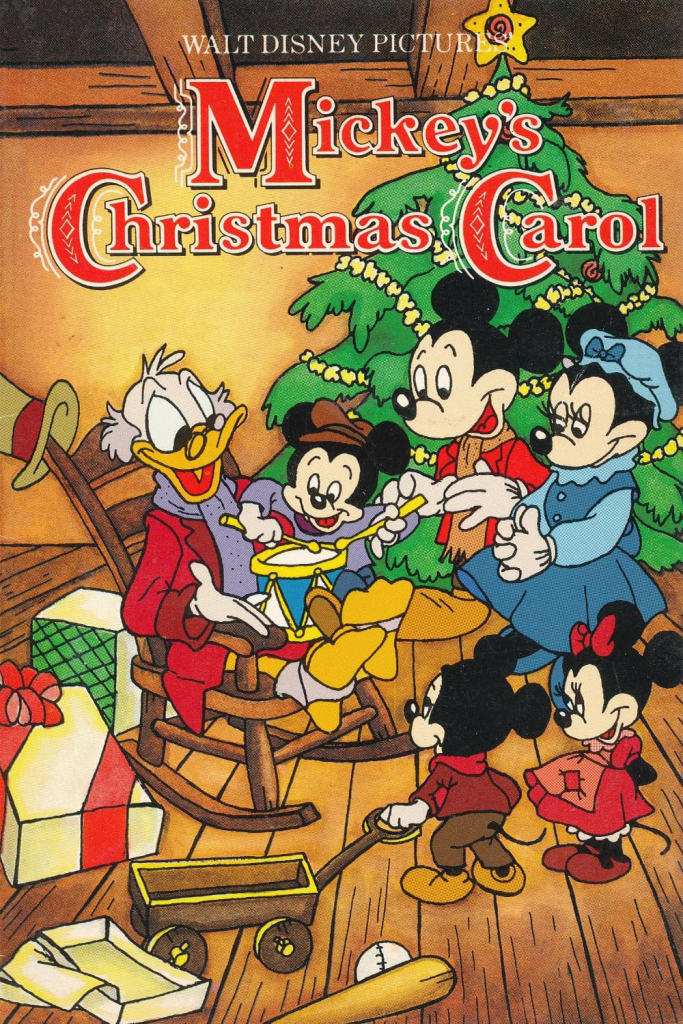
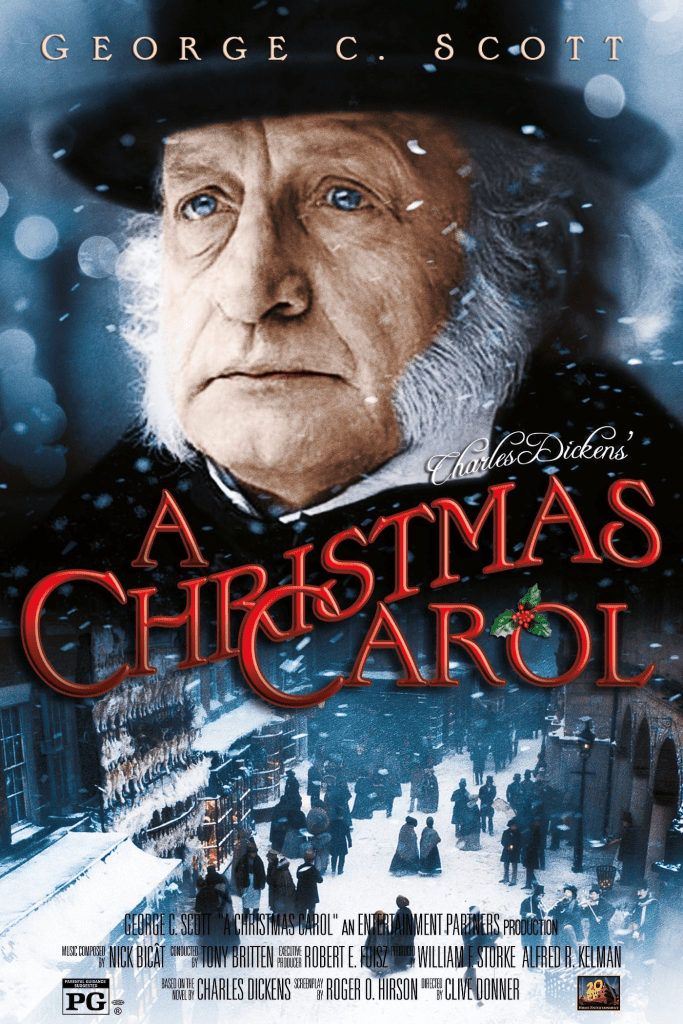
With countless adaptions in circulation, Mickey’s Christmas Carol (1983) by Disney and George C. Scott’s A Christmas Carol (1984) served very different audiences and interpretations of Ebenezer Scrooge.
As an animated adaptation, Disney visualized the story for children in less than thirty minutes without losing the plot or narrative arc. Familiar Disney characters inhabited Dickens’ world with ease: Goofy as Marley, Mickey as Bob Cratchit, Donald as Fred, and Scrooge McDuck with irony as Ebenezer. To keep pace and audience engagement, Disney simplified Scrooge’s character. He immediately began as the villain and transformed cleanly with moral clarity designed for younger audiences.
George C. Scott’s Scrooge, by contract, felt starkly human. He was not a snarling caricature but a man shaped by grief, class anxiety, and emotional sternness. Scott’s portrayal acknowledged Scrooge’s economic reality: why celebrate when survival felt uncertain? This version invited empathy rather than condemnation, asking not just whether Scrooge was cruel, but whether he was lonely.
Star Rating:
Page to Screen
Faithfulness to the Source: Both adaptations retained the story’s plot and themes, borrowing language, tone, and narrative rhythm. In Disney’s adaptation, the studio honored the plot economically. Scott’s film leaned into Dickens’ society, reflecting costuming choices that refused theatrical exaggeration and maintained grounded realism.
Where the Adaptations Departed: Disney trimmed nuance to prioritize story flow, understandably shedding minor emotional textures. Scott’s adaptation moved in the opposite direction: deepening Scrooge’s interior world and revealing the private tenderness Dickens only gestured toward.
What was Lost; What was Gained:
Lost:
- As a short film, Disney sacrificed character complexity.
- Scott’s Scrooge was no longer a strong antagonist. By humanizing him so fully, the antagonist force softened.
Gained:
- Disney made the story beautifully accessible, visually emotional, and unforgettable for children.
- Disney’s transition from the Ghost of Christmas Present and Future reached the climax of Scrooge’s character by emotionally visualizing the consequences of his actions.
- Scott provided psychological richness, widening empathy and reframing Scrooge less as a moral failure and more as a wounded human being.
- Scott’s early inclusion of Tiny Tim strengthened emotional payoff and thematic continuity.
Adaptation Fidelity Rating: High Integrity That Honors the Core Meaning While Innovating Boldly
And That’s a Wrap
There are countless Christmas Carol adaptations, and that is the point. The story returns, year after year, precisely because it feels ritualistic. It is the literary equivalent of a seasonal hymn that society refuses to stop singing.
Written in 1843, this story still resonates not as nostalgia, but as moral invitation. Whether encountered on page, stage, or screen, A Christmas Carol reminds us that redemption is not fantasy; it is a decision. And like Scrooge, we are asked each year to choose again
Reader’s Note: Which adaptation stays with you?
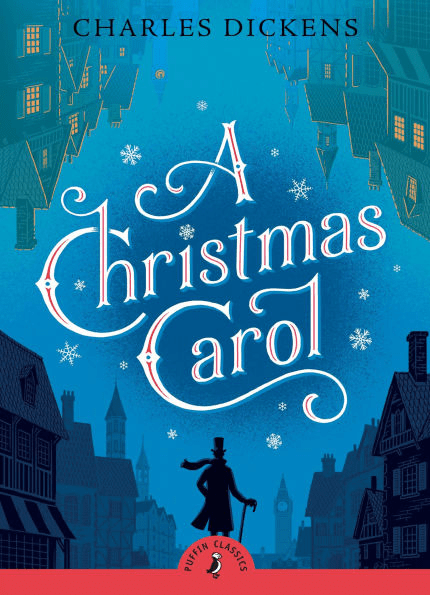
Charles Dickens, A Christmas Carol, Amazon. (Book: 2008 Cover)
Charles Dickens, A Christmas Carol, IMDB. (1983 Disney Film)
Charles Dickens, A Christmas Carol, IMDB. (1984 George Scott Film)
Destiny Lynn is a writer and reviewer with a passion for exploring the intersection of history, identity, and storytelling through musical theatre and novels adapted to screen.
 Book-in-Motion
You must be logged in to post a comment.