
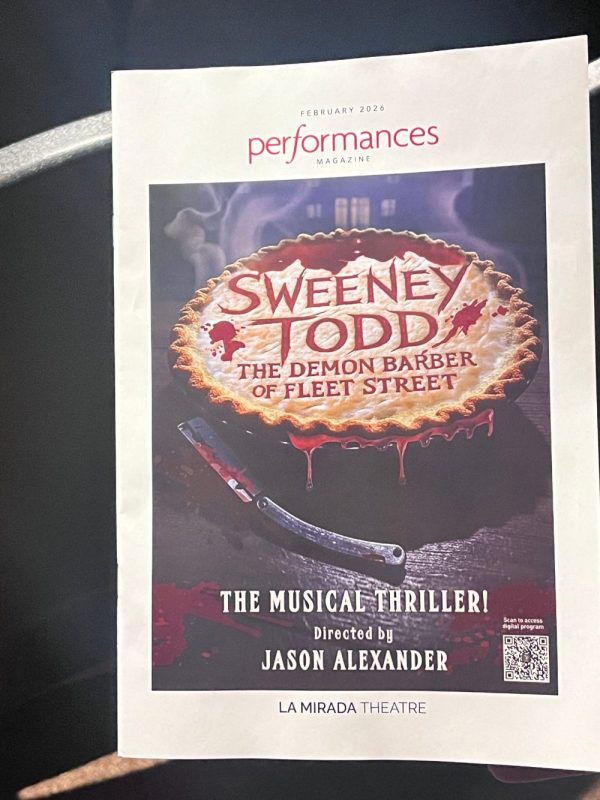
McCoy Rigby Entertainment / La Mirada Theatre
Director: Jason Alexander
Choreographer: Lee Martino
Run Time: 2 Hours, 45 Minutes (+ 15 Minute Intermission)
Review by Destiny Lynn
The Ballad of Sweeney Todd
He never forgets, he never forgives. But is revenge ever justified?
A tale as haunting as it was melodic arrived at La Mirada Theatre in an almost sold-out production of Sweeney Todd: The Demon Barber of Fleet Street. Under the direction of Jason Alexander, this musical thriller was reimagined through a new psychological lens transforming this classic into a story that questioned reality alongside mortality.
Featuring original music and lyrics by Stephen Sondheim, the story follows Sweeney Todd, once known as Benjamin Barker, whose life was destroyed by injustice. A former London barber, Todd was consumed by grief and sought revenge against Judge Turpin. Along the way, Todd partnered with Mrs. Lovett, whose struggling pie shop became the unlikely centerpiece of his revenge. What began as justice quickly descended into obsession, revealing the dangerous cost of unchecked anger.
Thrilling, Contorted Acting
Will Swenson led the production as Sweeney Todd, portraying the character with a steady sense of disillusionment. From his first appearance, Swenson emphasized emotional detachment rather than explosive rage, allowing resentment to simmer beneath the surface. Moments such as his reunion with his barber blades carried quiet tension, though Act II’s heightened violence occasionally called for a deeper release of fury to amplify the emotional impact of Todd’s final actions.
Lesli Margherita’s Mrs. Lovett proved neither Swenson’s foil nor sidekick. Instead, she was an equal force driving the narrative. Commanding the stage with a sharp, comedic timing, quirky acting, and powerful vocals, Margherita fully embraced her character’s manipulative charm. Leaning boldly into Alexander’s psychological vision, she transformed Mrs. Lovett into both an accomplice and instigator, embodying the idea that behind great tragedy often stood an even more complicated partner.
Chris Hunter’s Anthony revealed more of Swenson’s foil by serving as a hopeful counterbalance to Todd’s darkness. Often portrayed as naive, Hunter presented sincerity and emotional openness, supporting some of the production’s strongest vocal performances. Numbers such as “There’s No Place Like London” and “Johanna,” highlighted his tender optimism, grounding the production’s darker themes with genuine humanity.
Meanwhile, the ensemble played an essential role as patients in Fogg’s Asylum. Through synchronized movements, twitches, and fragmented interactions, the ensemble created an unsettling atmosphere that reinforced the production’s psychological framework.
While not a patient, Austyn Myers elevated the ensemble’s movements and delivered a standout performance as Tobias. In “Not While I’m Around,” Myers combined melodic clarity with physical vulnerability. Ultimately, his authenticity created one of the evening’s emotionally resonant moments.
A Play Within a Play?
Sweeney Todd is a challenging production in musical theatre for its technical and narrative complexity. Blending layered storytelling with music reflected the internal and external conflicts. Under Director Jason Alexander, his vision reimagined this production through a psychological, on the brink of insanity, perspective that succeeded in questioning reality.
Fogg’s Asylum and the patients within were integral to this concept. Starting from a soft opening, the patients meandered on stage to gradually shape the tone of the play. Despite the psychological mood, Alexander balanced this tension with unexpected humor, staging murders with ironic theatricality. Rather than graphic, gory deaths, victims were casually placed into moving garbage bins, allowing dark comedy to coexist with horror. Instead of traditional stage blood, red petals were sprinkled across the stage to symbolize each murder. The repetition clarified the production’s satirical tone and style that invited audiences to understand the absurdity beneath the violence.
While not used in all productions, Alexander opted to cleverly make the Overseer character more prominent in the story without any spoken lines. Situated high above the stage, the Overseer functioned as the unspoken narrator, or rather puppeteer, orchestrating the story by pulling levers to signal key moments throughout the production. The piercing screeching sound accompanying each murder heightened the tension and reinforced the possibility that the narrative itself was being controlled or imagined by the asylum’s inhabitants.
A New Take on Blood and Gore
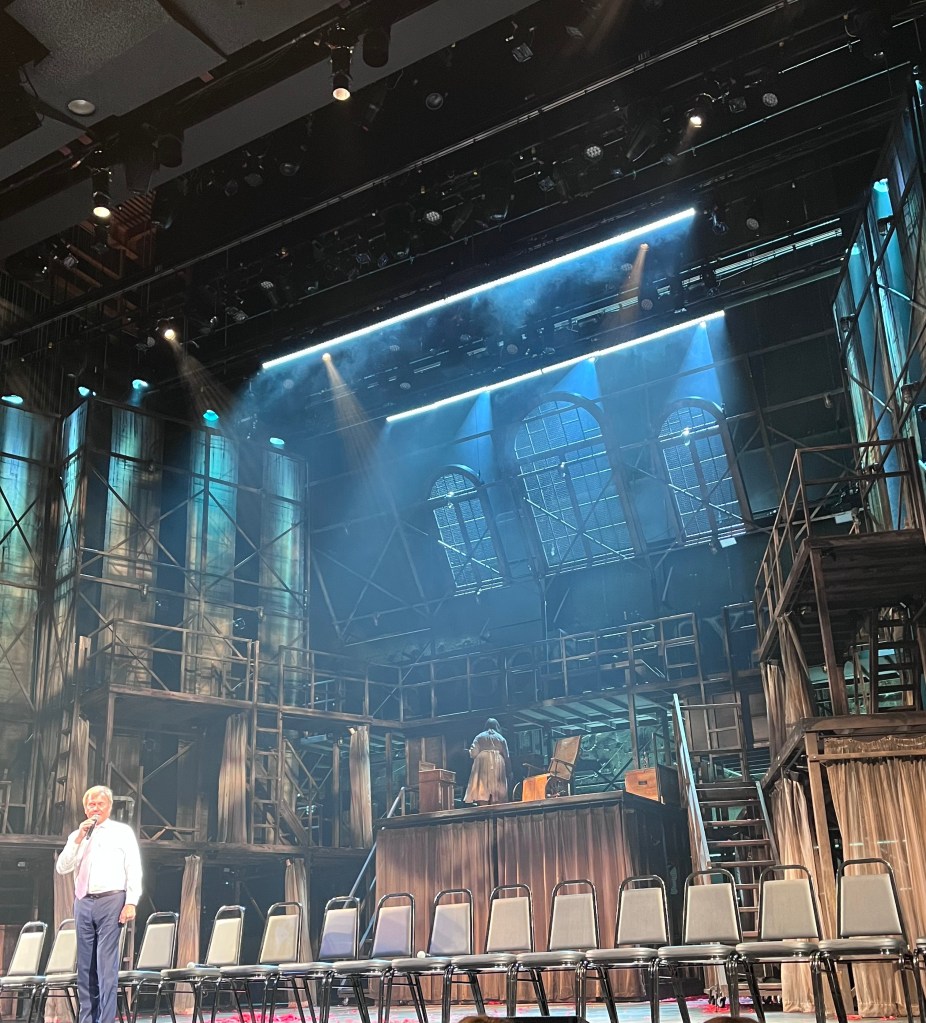
La Mirada Theatre once again demonstrated its strength in its elaborate stage and scenic design, following visually aesthetic productions such as Mystic Pizza and Come From Away. Sweeney Todd was no exception. The stage’s multi-level set featured the Oversee above, Todd’s shop mid-stage, and the ensemble below, allowing for dynamic staging and quick transitions. While opting for a soft opening, the climatic fall at the end stood out as a technically impressive moment that blended choreography and stagecraft for a striking conclusion.
Known for its bloody imagery, Alexander instead symbolized death through detailed aesthetics in Sweeney Todd. The use of red petals launched in a confetti fashion alongside gothic makeup designers revealed a theatrical spectacle rather than a shock value. The result felt artistic rather than graphic, allowing psychological terror to take precedence over physical violence.
Keeping Score!
While often repetitive, Sweeney Todd’s score infused ballad-style music with horror. Notable scenes from “There’s No Place Like London, Johanna, and Not While I’m Around” reflected the softer, narrative components of the story and characters. However, songs in the “Final Sequence” added intensity and conflict to the scene through quick, competing dialogues from Sweeney and Mrs. Lovett. Ultimately, composer and lyricist Stephen Sondheim aimed at creating a linear musical that reflected the character’s thoughts and surroundings that was largely cohesive.
The Consequences of Vengeance
At its core, Sweeney Todd examined how justified anger could evolve into moral collapse and regret. While experiencing genuine injustice from Judge Turpin, Sweeney Todd lost his family, his identity, and eventually his sanity through his pursuit for revenge. Mrs. Lovett’s financial opportunity complicated the moral landscape as she capitalized on Todd’s grief and negative reputation and enabled him to return as a barber.
Set against a struggling London society where desperation paved the way for survival, the production suggested that circumstances may explain violence but never forgives it. In the end, Todd became the instigator and victim, ultimately illustrating how vengeance consumes the one who holds it.
Ultimately, Jason Alexander’s psychologically driven interpretation proved ambitious and effective in offering a fresh perspective on a staged classic. While audiences expecting graphic horror may find the restrained violence surprising, the emotional intensity remains central. Fans of Les Miserables would appreciate the storytelling drama and lyrical changes with an added layer of terror. However, they are polar opposites of lessons learned. With many adaptations on screen and on stage, emphasis on the blood and gore would not be suitable for children. Even though Jason Alexander’s vision opted for a bloodless event, the terror was still prominent. Nevertheless, collect your blade and grab a pie for a chilling evening of thrilling surprise.
Destiny Lynn is a writer and reviewer with a passion for exploring the intersection of history, identity, and storytelling through musical theatre and novels adapted to screen.
 Book-in-Motion
You must be logged in to post a comment.