
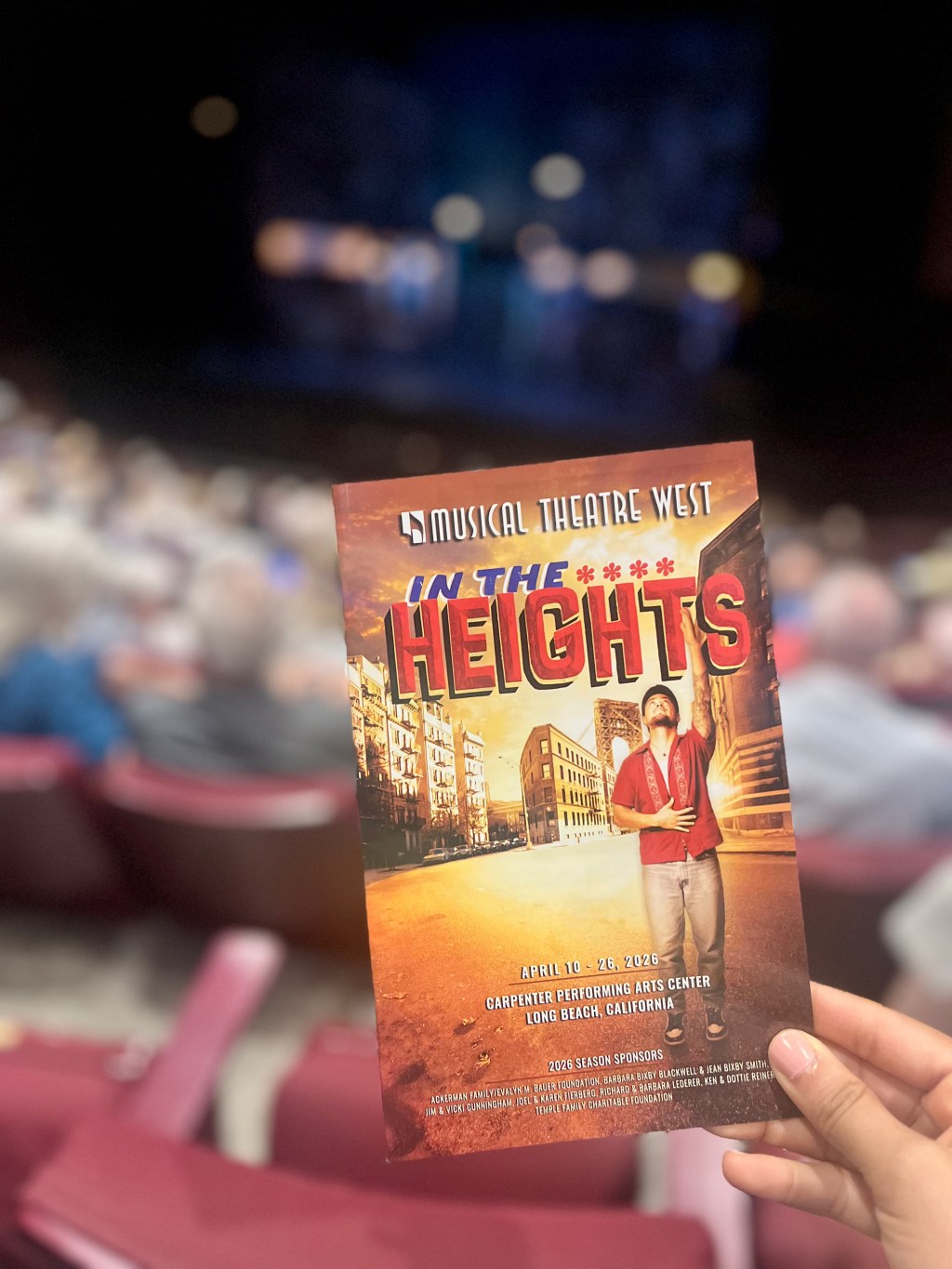
Musical Theatre West / Carpenter Performing Arts Center
Director: Jesse J. Sanchez
Associate Director & Choreographer: Marissa Herrera
Musical Director: Rod Bagheri
Run Time: 2 Hours, 30 Minutes (+ 15 Minute Intermission)
Review by Destiny Lynn
A Personal Introduction
What happens when expectations counter reality? The promise of the American Dream was constantly reshaped by the realities of daily life in Lin-Manuel Miranda’s In the Heights, where ambition echoed survival, identity, and community. As part of their season of dreams, The Carpenters’ Performing Arts Center’s production captured the tension with warmth and energy, even as uneven pacing and underdeveloped conflicts prevented the story from fully delivering on its emotional stakes.
Starring Ruben J. Carbajal as Usnavi, this multigenerational story revealed the struggles and hope in Washington Heights, New York, set over three days. Already struggling to maintain their businesses in the painful July heat, a blackout in 2003 exacerbated consequences within the community. Rooted in hip-hop and Latin-infused rhythms, the message was authentic and clear: what was the American Dream, and what happened when expectations countered reality? In the Heights questioned the American Dream, while leaning on the community to redefine expectations.
A Community of Diverse Talent
A show highlighting multiple generations with their own dreams, In the Heights demonstrated that community by featuring seasoned professionals alongside a student ensemble. Aside from moments when the student ensemble performed in the audience, it was challenging to distinguish by the level of talent. The result was a community that felt authentic by allowing experienced and emerging talent to coexist on stage.
Ruben J. Carbajal anchored the production as Usnavi with a performance that balanced warmth, energy, and quiet responsibility. Carbajal understood his role as he was no stranger to Lin-Manuel Miranda or the stage. Having starred alongside Miranda in Hamilton, Carbajal brought versatility and Miranda-influence to his character. Spreading hip hop lyrics or caring for the community’s abuela, Carbajal developed a character audiences personally connected with. As someone who gave more than received, whether it was free cafe con leche to the neighboring Vanessa, audiences felt Usnavi’s pain and anger when his Bodega was damaged in Act II. We also secretly hoped he would win over Vanessa’s heart, played by Angelica Lozada Ramos.
A stubborn adolescent, Adam Leiva as Sonny added humor through tense moments as a teenager who wanted a voice in his community but lacked guidance. Paired against professionals with noteworthy resumes, Leiva charmed audiences through his rebellions, knowing his character would do what was asked of him.
As a supporting character, Elvira Barjau made a notable impact on Camila Rosario, particularly in developing a contention between a disappointed and loving mother in Act I to an angry and forgiving one in Act II. As one who deeply cared for her family, she revealed her frustrations towards her daughter’s experience in college and struggles with the family business. However, Act II marked a clear turning point in “Enough,” where she demanded attention from the audience and members on stage. Instead of encouraging and supporting decisions, she was now in charge.
A Singular Set That Evolves with the Story
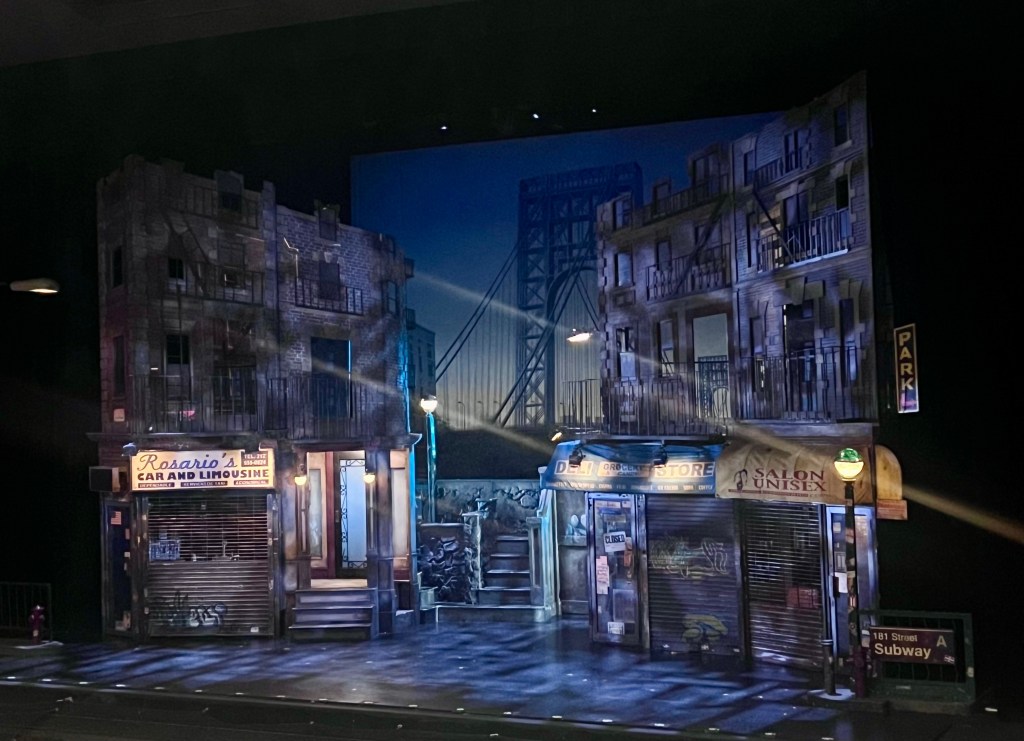
A realistic centerpiece depicted daily life on the streets of Manhattan, including Usnavi’s Bodega, Daniela’s Salon, and Rosario’s family business. Particularly striking was the immediate aftermath of the blackout that resulted in Usnavi’s Bodega getting looted and damaged. Using the same set with rips here and there, bottles and trash scattered, and graffiti on the building, the same set piece managed to transform into an emotional scene. It was a reminder that stability within communities was never guaranteed. Wait until the final scene for an impactful moment, where they once again changed one aspect without shifting the entire set.
These stylistic choices revealed that simplicity could make significant impacts in a story. However, this was not to suggest that the set was a simple backdrop. In coordination with the acting, the details in the building and pride from the community situated the audience in a diverse Latin community in New York. Moving between characters whose dreams were deeply personal but collectively shaped, the production connected with the set that felt lived in, rather than staged.
Direction and Tension that Sometimes Felt Unearned
However, where the acting, music, and designs were cohesive, the story was packed with competing visions that disrupted the narrative’s clarity. A lot happened in the story’s three-day setting, from struggling businesses, pressures and expectations, relationships, and spirited communities. Ruben J. Carbajal served as the lead and narrator, while allowing characters’ identities to form in Act I. With a large cast, keeping track of the different backstories overextended Act I.
After the blackout in Act II, the pacing was structured in navigating the community’s struggle and lasting decisions. However, tensions among some characters felt abrupt and undeserved. Tension between Kevin Rosario and Benny escalated without enough groundwork, making their fallout feel abrupt rather than inevitable. What should read as a deeply personal rupture felt underexplored and weakened its emotional impact. Despite the pacing, Director Jesse J. Sanchez excelled in making the spirit of the community shine.
Keeping Score!
Like Hamilton, also created by Lin-Manuel Miranda, the music reflected contemporary styles to tell culturally specific stories. Where Hamilton reframed history, In the Heights remained grounded in the everyday realities that shape identity and opportunity.
Musically, it was the heartbeat that showcased what major characters desired in life. Operating as a mixtape that shifted from salsa, hip hop, merengue, and pop, the music reflected cultural diversity in Washington Heights. In conjunction with the choreography, moments from “96,000” echoed collective ambition. Meanwhile, “Alabanza” and “Carnaval del Barrio” emphasized spirit and resiliency from the community.
Identity, Freedom, Home
Ultimately, In the Heights was a contemporary blend of musical choices and dialogue that reflected realism in the Latin American community. The story revealed real-life struggles business-owners faced in keeping their company alive from internal and external consequences. The blackout changed the trajectory of many of these businesses; however, the community’s spirit remained in celebrating their culture through song and dance.
Musical Theatre West’s In the Heights succeeded in capturing the spirit of a community negotiating what the American Dream looked like in practice. While the narrative structure did not fully support its emotional ambitions, the production remained grounded in something more enduring: dreams were not defined by success alone, but by the people and experiences that shaped them.
Fans of In the Heights will appreciate Lin-Manuel Miranda’s Hamilton for its hip-hop driven music and dancing. If Hamilton contemporized American history, In the Heights revealed the raw experiences of a community finding their place within the American Dream.
Destiny Lynn is a writer and reviewer who explores the intersection of history, identity, and storytelling through musical theatre and novels adapted to stage and screen.


You must be logged in to post a comment.