
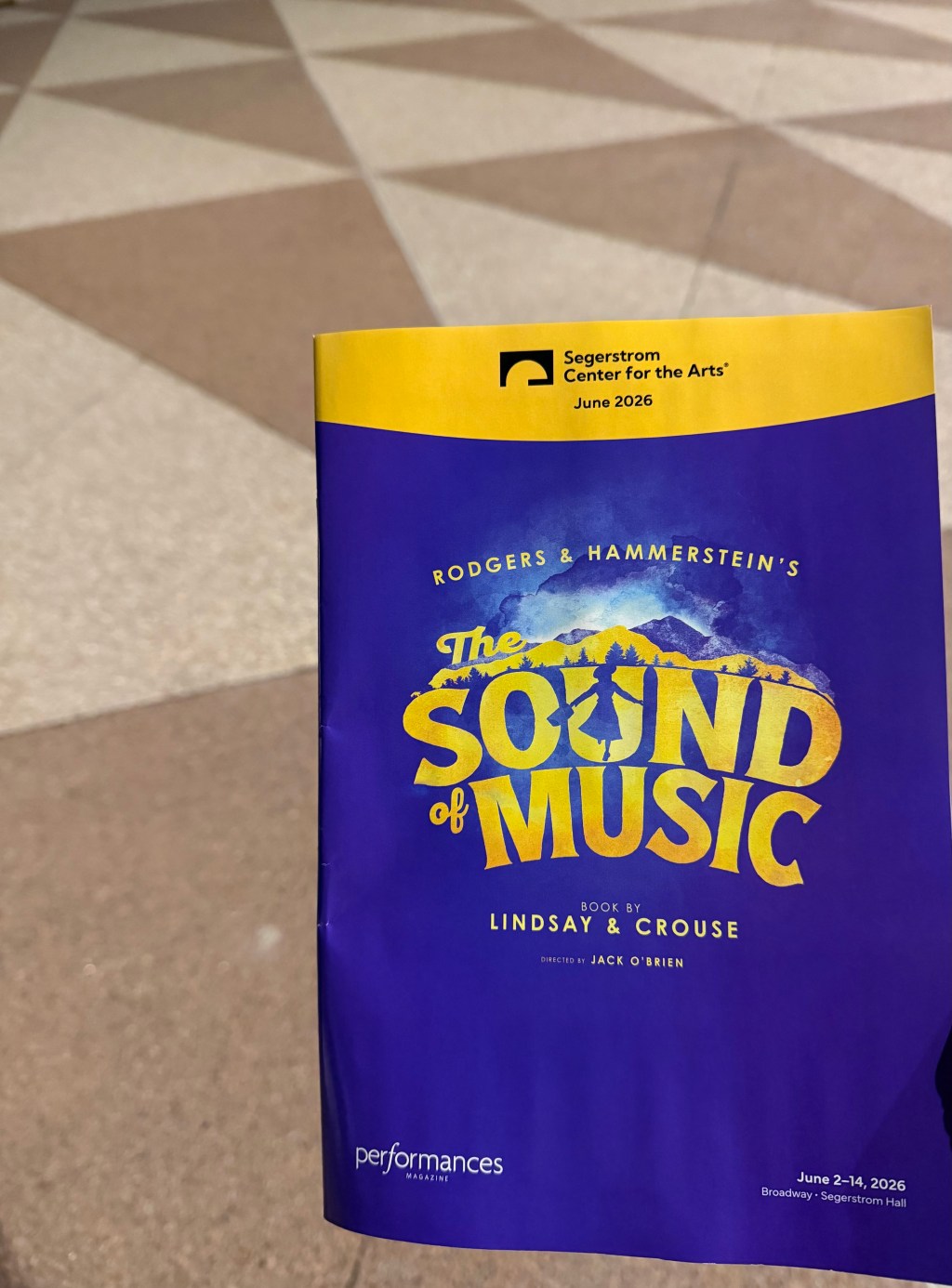
North American Tour / Segerstrom Center for the Arts
Director: Jack O’Brien
Run Time: 2 Hours and 35 Minutes (+ 20 Minute Intermission)
Review by Destiny Lynn
A Timeless Introduction
What power does music have? The power to heal? To mourn? To enlighten? For sixty-five years, Rodgers and Hammerstein’s The Sound of Music has captured audiences through familiar lyrics of “Do-Re-Mi” and “My Favorite Things.” A timeless classic, Segerstrom Center for the Arts presents The Sound of Music in a performance rich with vocal, operatic clarity and heart that transcends the fourth wall. This North American tour cast, representing different ages and experiences, evidently demonstrates their chemistry on stage through song.
Adapted from the stage musical that later became a beloved film, Director Jack O’Brien emphasizes historical tensions within a familiar setting in his stage production. Introducing the stubborn, but good-hearted Maria Rainer, the story follows her journey as she ventures to the great walls of the von Trapp family villa to fulfill God’s plans of taking care of his seven children. A family who shut out the joy of singing and laughter in exchange for commands by a whistle, Maria’s initial stay was extended as she grew to love more than the children, but ultimately the entire von Trapp family. Set against the growing tensions of Nazi encroachment into Austria, Maria and the von Trapp family must decide how far music could transcend.
A Few of “My Favorite Things” About Their Acting
Cayleigh Capaldi as Maria Rainer offers a youthful and energetic performance that naturally complements the ensemble’s spirit. Confidently serenading audiences through operatic notes, Capaldi retains her optimism even during moments of uncertainty. Meanwhile, Kevin Earley as Captain Georg von Trapp excels vocally but lacks the commanding authority expected of the character. Perhaps due to sound malfunctions, whistle commands fail to capture the audience’s attention. However, his strongest display of authority emerges in a scene initially without any dialogue. Leading into “Edelweiss,” the silence as Earley stares at the four swastikas displayed on the red banners reveals the anger, grief, and disappointment.
Chrstiane Noll as Mother Abbess was disappointing not because of her talent, instead, with how the talent is utilized. Evidently capable of articulating operatic notes in “Climb Ev’ry Mountain,” stronger coordination with the sound team could amplify those echoes in the Nonnberg Abbey the production seeks to create. Unfortunately, a powerhouse vocalist was underutilized through no fault of her own.
Finally, the ensemble of Captain von Trapp’s children renders their success by fully embracing what they are meant to be: children. Youthful abundance made it challenging for the audience not to smile during “Do-Re-Mi” as they confidently sprang up in time for their line in the song.
Directing with Respect for History
Undoubtedly a lengthy production with an extended first act, The Sound of Music gains momentum through the historical tensions under Jack O’Brien’s direction. Functioning almost as an unspoken character, Nazi encroachment into Austria is reflected through armbands, tense conversations, and rebranded soldiers to prepare for the shock in Act II during the concert hall scene. Much more integral than the film, O’Brien maintains a respectful reminder that society could be a bystander or a change agent in moments of uncertainty and political instability.
“Something Good” About the Sets: Depth and Respect
Keeping with historical tradition in costume and set designs, this production displays visually rich backdrops and Austrian-clothing from buttoned wool vests to long cotton dresses. The visuals of the hills in the background in the opening number compliments with a richer blend when seen through the windows in Captain von Trapp’s villa. Along with the painted definition of the backdrops, the physical sets provide dimension through a long, curved staircase and tall windows that serve as the front, back, or inside, depending on the placement. Multifaceted in one sense, these backdrops and physical sets made for quick transitions.
“Climb Ev’ry Mountain” in the Lessons of The Sound of Music
Even after sixty-five years, The Sound of Music continues to deliver a generational impact that echoes the power of music. Maria, who never quite fit in with the Abbey’s traditions, uses her singing to heal a grieving Captain through reconnecting with his seven children. Once again filling the villa with song, love emerges naturally from children to adults respectively. Maria’s can-do attitude gave her the confidence to challenge herself in new situations, while staying grounded in a genuine character filled with heart. Singing as an outlet was also used as a reflection tool. Notably in “Edelweiss,” Captain Georg von Trapp used a moment to reflect on a beloved country he was unsure he could ever return to.
“So Long, Farewell” to a Classic Performance
Authentic in heart and purity, The Sound of Music is suitable for various audiences with the reminder of mature references of Nazi propaganda. Fans of history of a similar mood would appreciate other notable classics such as Les Miserables and Phantom of the Opera. However, there is still a chance to see this cast perform at Segerstrom Center until June 14th!
Destiny Lynn is a writer and reviewer with a passion for exploring the intersection of history, identity, and storytelling through musical theatre and novels adapted to screen.

