North American Tour / Segerstrom Center for the Arts
Director: Seth Sklar-Heyn
Music: Andrew Lloyd Webber
Run Time: 2 Hours, 15 Minutes (+ 15 Minute Intermission)
Next in Motion by Destiny Lynn
At a Glance
- Broadway’s longest-running productions
- The music, gothic aesthetic, and chandelier energize the story’s lasting impact
- Originally based on Gaston’s Leroux’s book Le Fantôme de l’Opera (1910)
- Best for fans of history, opera, and a classic love triangle
Leave Box Five Open for Broadway’s Longest-Running Production
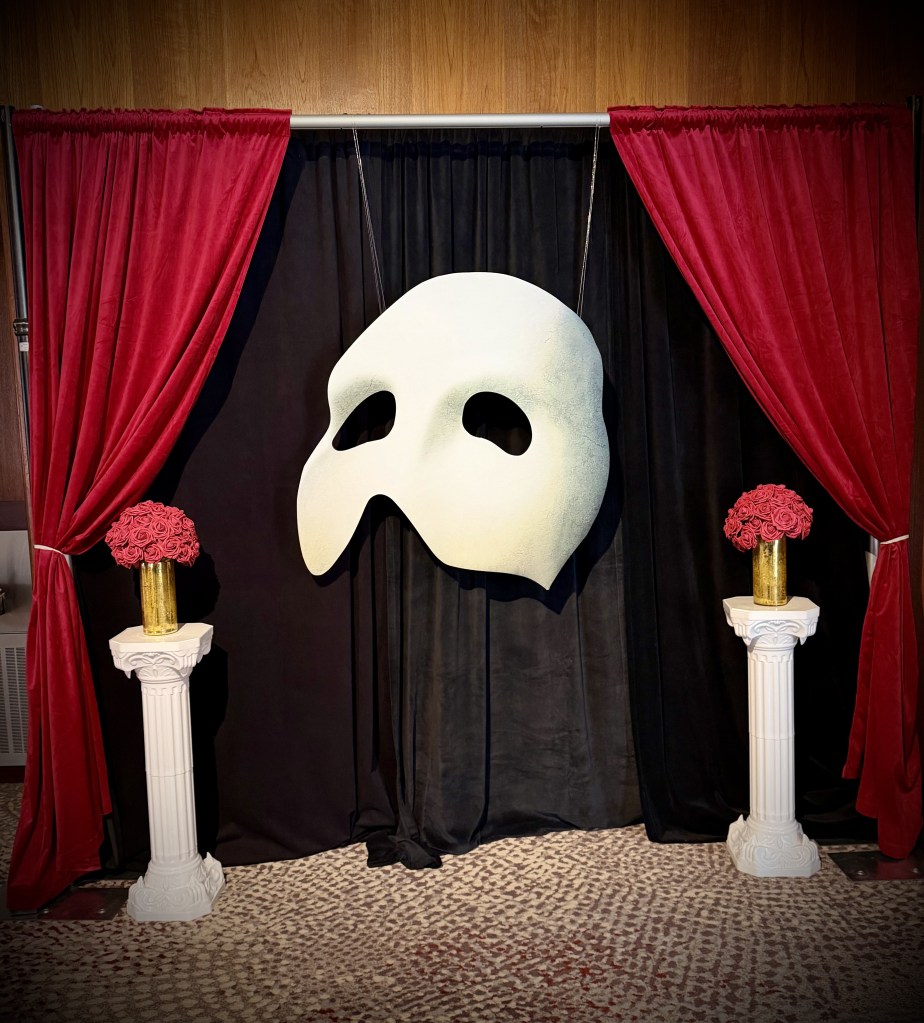
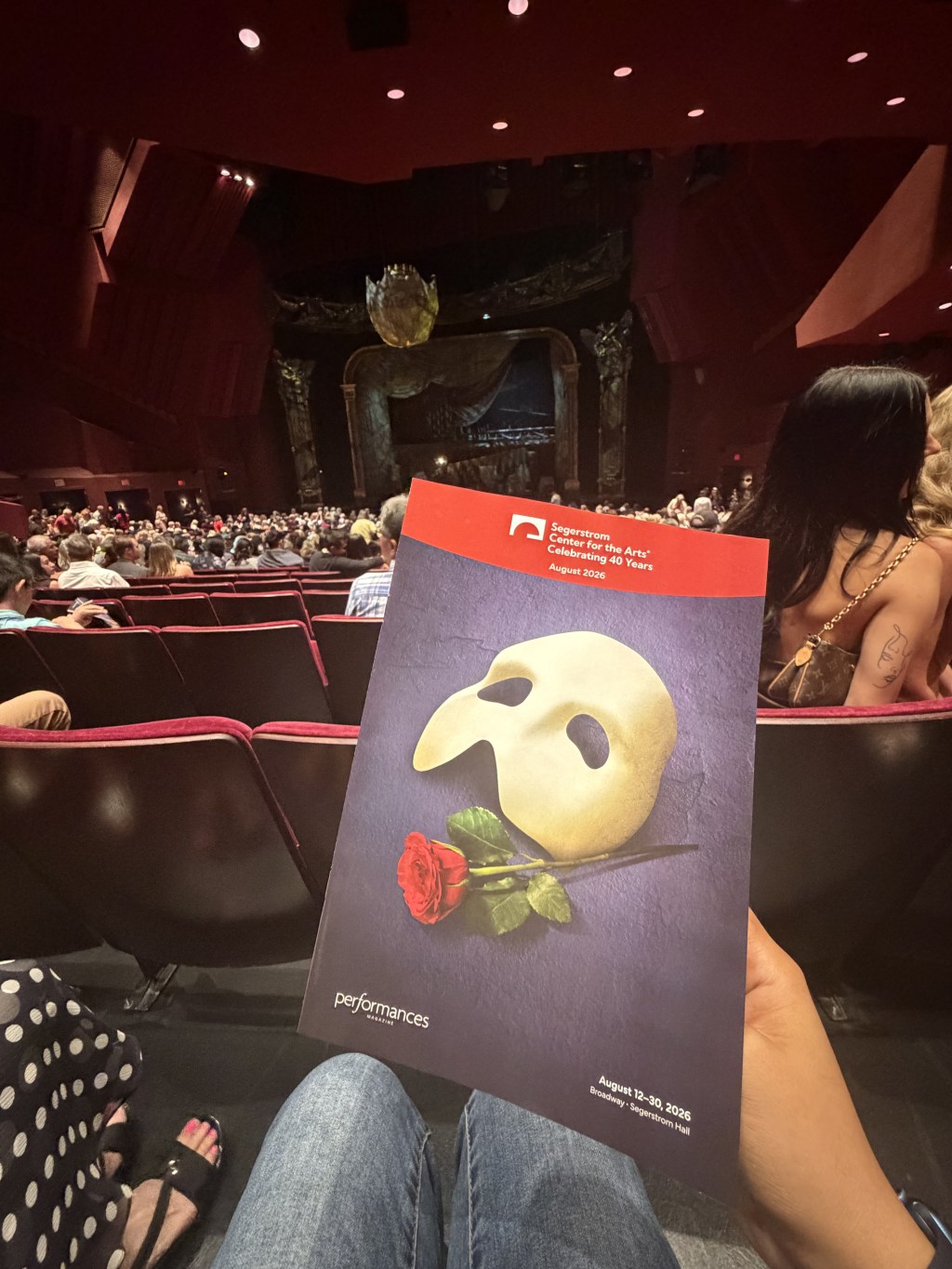
“Keep your hand at the level of your eye” before the Phantom captures your gaze through song, spectacle, and mystery. Beneath the grand stage of the Paris Opera House lives an Opera Ghost, a masked figure who falls in love with a young chorus girl and believes she alone could perform his masterpiece. As Christine Daaé rises from the ensemble to center stage, the Phantom manipulates the opera house to keep her in his grasp, leaving Christine caught between his obsession and her childhood sweetheart, Raoul, Vicomte de Chagny. Once again, The Phantom of the Opera fills Segerstrom Center for the Arts with its gothic atmosphere, complex score, and theatrical spectacle in a nearly sold-out performance.
Under the direction of Seth Sklar-Heyn, The Phantom of the Opera navigates the stage’s constraints and fills the audience with anticipation. How would the grand chandelier fall? How would the Phantom reveal his identity through song? The aesthetic horror and special effects reveal the answer.
Center Stage: The Angel of Music
Starring Isaiah Bailey (Phantom), Jordan Lee Gilbert (Christine), and Daniel Lopez (Raoul, Vicomte de Chagny), this leading cast overcame their demanding vocal requirements for this score. Particularly Jordan Lee Gilbert, she echoes her operatic notes each time the Phantom demands more. Meanwhile, Isaiah Bailey quickly balances octaves, singing high but extended notes in some songs, and loud, deeper vocals in others. Bailey even manages to incorporate subtle soul and R&B into this classic score.
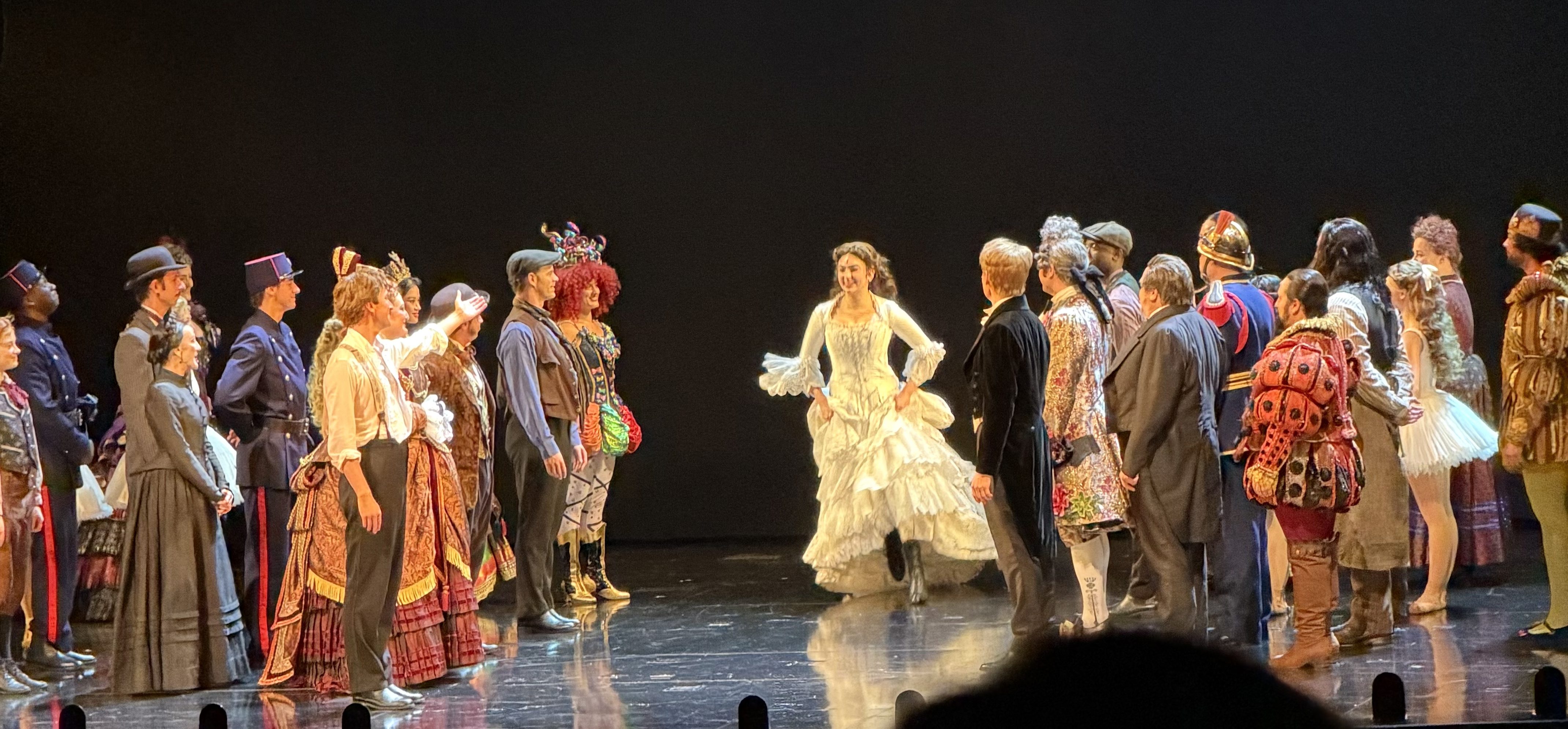
With the performing taking center stage in this large cast, the stage is constrained throughout both acts. Particularly in the opening and masquerade scene, the ensemble requires precision as they move across the stage and avoid stationary props. Speaking of mascarades, Act II opens with the opera ball blending ensemble with painted cast members to give the illusion of a grand attendance descending down the staircase. However, with the large cast performing on the smaller stage, the leads often blended in with the ensemble.
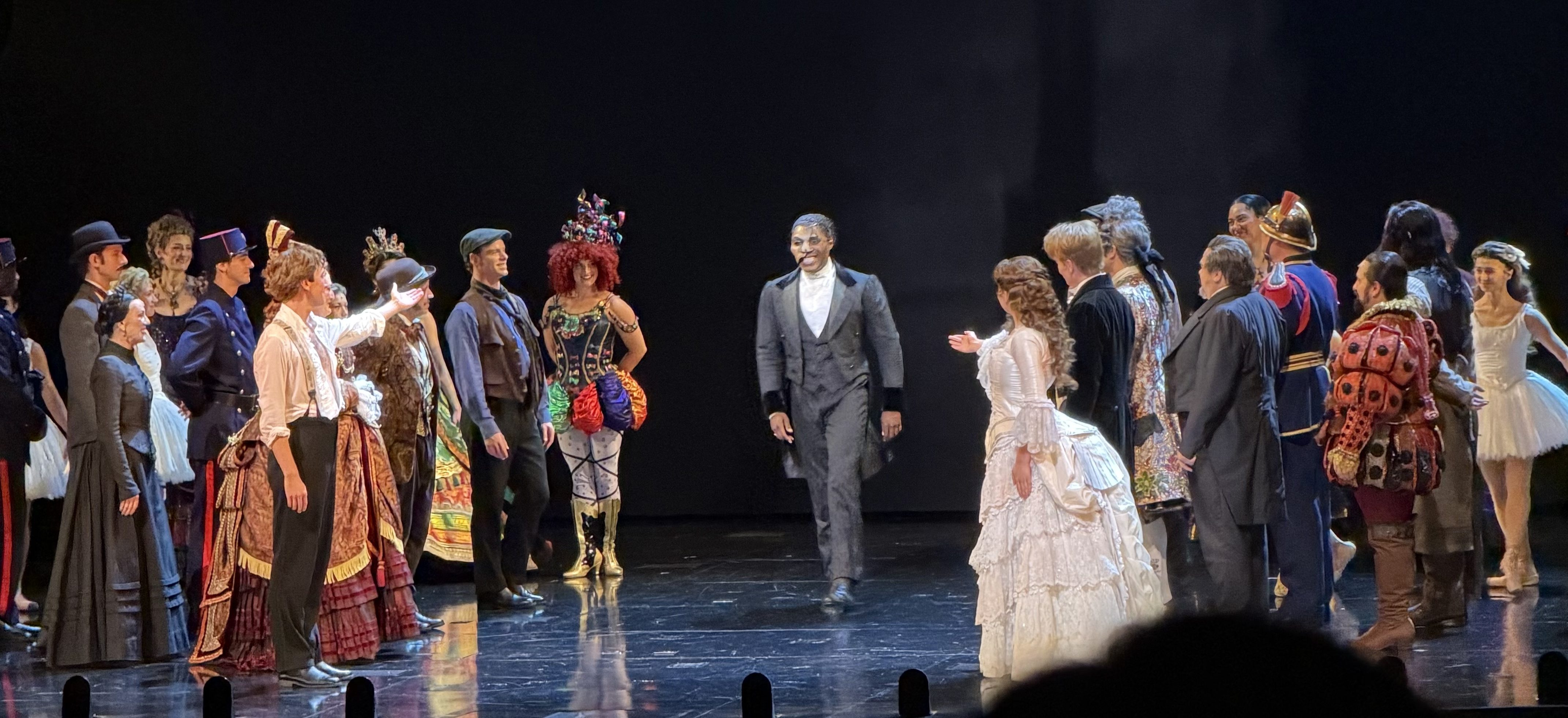
Despite the stage constraints, the special effects and makeup for the Phantom demonstrate the artistry from the design team. Patrons sitting closer to the stage have the luxury of seeing this off-white, slightly golden mask reveal the skeletal figure hidden behind. The rest of the audience experiences the dramatic impact behind the Phantom’s jealous outbursts as fire emits from his walking stick, which also helps him vanish onstage. Look slightly beyond the stage and you will notice the grand chandelier that repairs in midair through sparks and even echoes the Phantom’s voice, making him feel near on each corner of the theatre. Despite the underwhelming fall at the close of Act I, the prop makes for an elegant photo.
Behind the Mask: Evolution Across Mediums
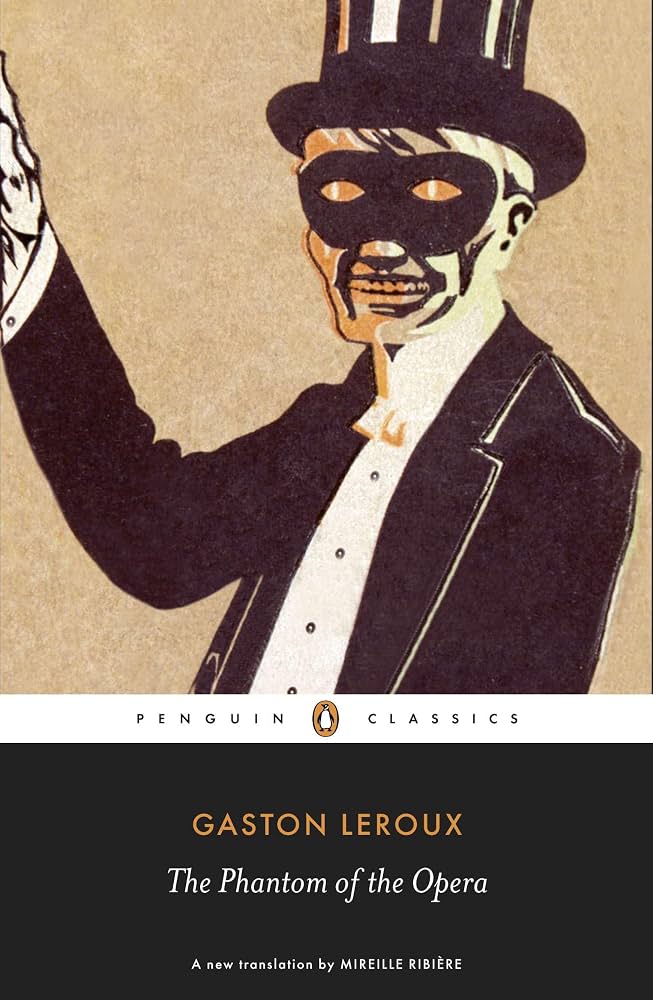
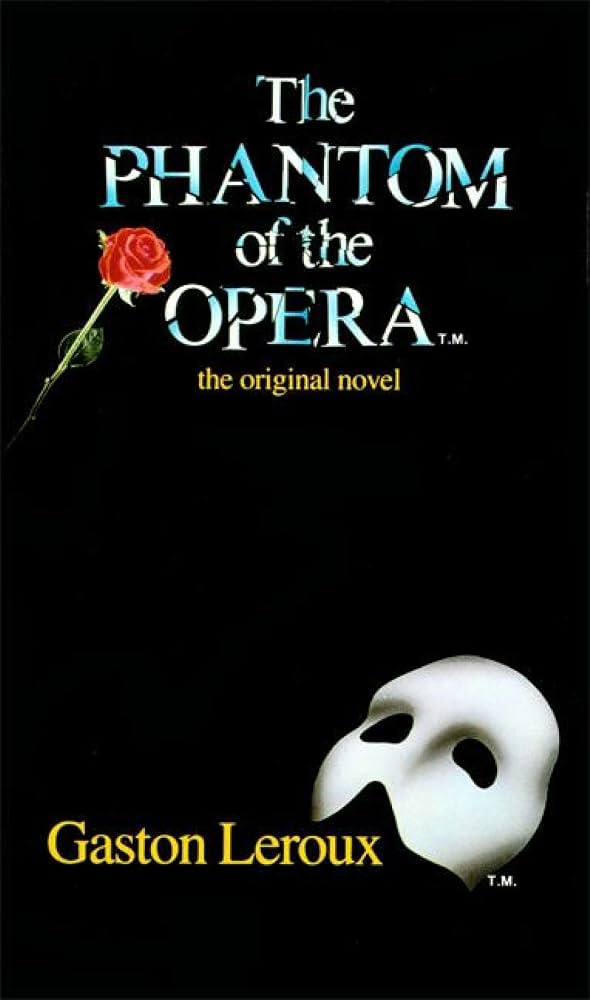
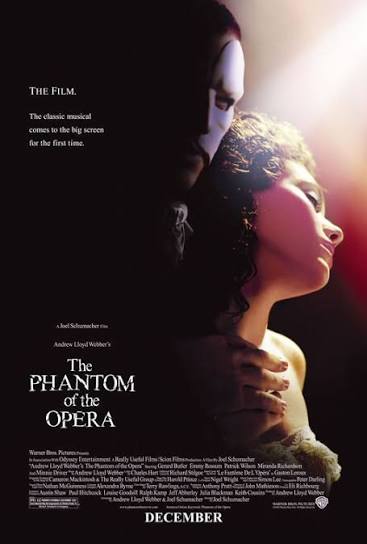
Now at this point, many theatre fans are familiar with the mask, the music, and the chandelier. However, did you know that The Phantom of the Opera originated long before Andrew Lloyd Webber’s musical creation?
In 1910, French author Gaston Leroux published Le Fantome de l’Opera, a novel that blended romance, jealousy, and deformity. In his opening pages, Leroux presented his story as an investigation into whether an actual man was referred to as the “Opera Ghost” living beneath the Palais Garnier Opera House. What else could explain the mysterious events, falling chandelier, and underground reservoir within the opera? Although the Phantom remained fictional, Leroux relied on historical stories surrounding the theatre to make the novel authentic.
That blend helped The Phantom of the Opera survive well beyond the pages. From silent films in the early 1900s to Joel Schumacher’ s 2004 adaptation, the lasting impact emerged from Andrew Lloyd Webber’s 1986 West End premiere in London. Revealing an almost 40-year run in London and a 35-year run on Broadway, The Phantom of the Opera produced record-breaking runs.
Keeping Score!
While not purely an operatic score, Andrew Lloyd Webber skillfully takes the audience on a journey through music that feels tenderhearted on one spectrum and explosive on the other. Echoing the first few piano chords from the “Overture” and again in the song that bears the production’s name instantly navigates the story’s themes: Love, loss, and revenge. One thing is certain: listening to the score from a live orchestra drastically creates an immersive experience that is felt from individual seats. In coordination with Charles Hart, the lyrics entrench these feelings through musical storytelling and vocal stamina to maintain long operatic notes. Familiar favorites include “Think of Me,” “All I Ask,” and “The Point of No Return,” each revealing different turns in the story.
The Point of No Return: Is This Right For You?
Ultimately, The Phantom of the Opera remains a classic for the storytelling and musical complexity from the orchestra and performers alike. Despite taking place in Paris during the late 1800s, the love triangle, the jealousy, and the greed remain very relevant. Seasoned audiences of The Phantom of the Opera undoubtedly have their favorite “Phantom.” While not reimagining the production, this Phantom stealthy intertwines soul and opera in creating the “Angel of Music.”
Fans of history will appreciate learning about the history of the actual opera house in France, known as the Palais Garnier. While fictional in performance, the musical was inspired by factual events such as the infamous chandelier that fell into the audience, the underground lake in the theatre, and the mystery behind the “Opera Ghost.” In relation, fans of literature will take special care in how Gaston Leroux’s Le Fantome de l’Opera (1910) novel was transformed into this lasting contemporary musical.
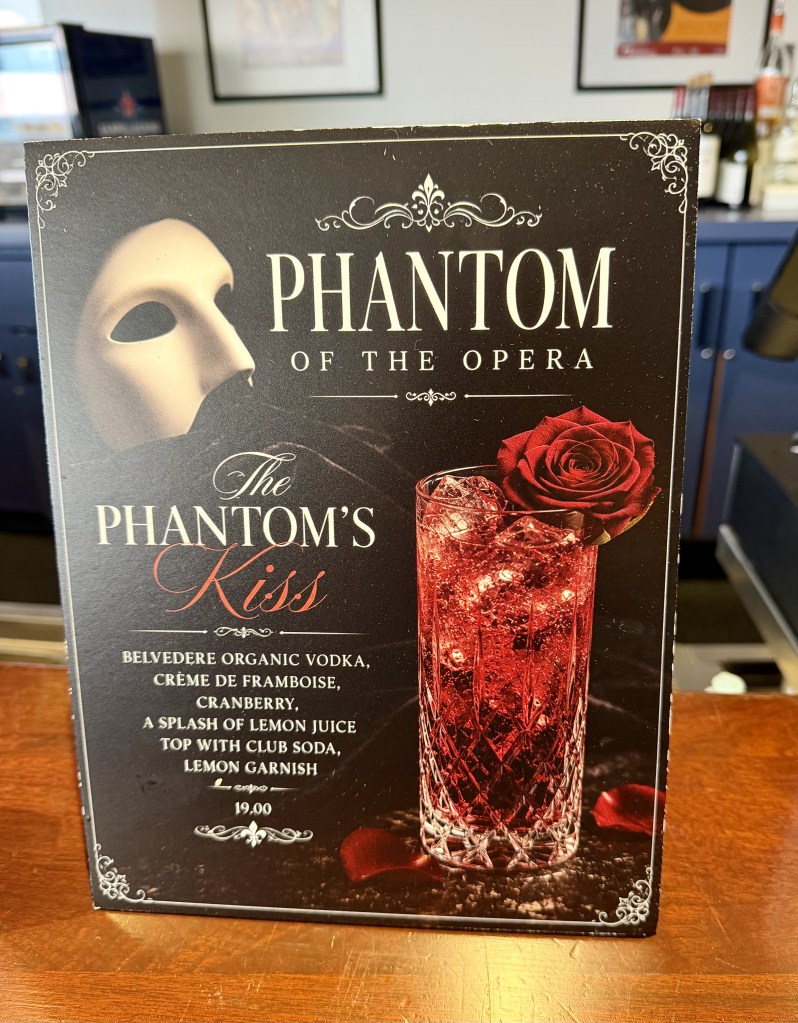
Segerstrom Center for the Arts concludes this classic by August 30, 2025. If you are lucky to secure a seat in this nearly sold-out run, be sure to stop on each floor for photo opportunities and a phantom’s kiss. However, if you do not mind a small drive to San Diego, the tour continues their journey September 2-13 at the Civic Theatre.
Takeaway: The Phantom of the Opera reminds us of the destruction that can arise when the desire to possess beauty becomes obsession. And who does not adore a mystery? Just remember to leave box five empty, and your life will be spared.
Destiny Lynn is a writer who explores the intersection of history, identity, and storytelling through musical theatre and novels adapted to stage and screen.


You must be logged in to post a comment.