North American Tour / Segerstrom Center for the Arts
Director: John Tiffany
Illusions & Magic: Jamie Harrison
Run Time: 2 Hours, 40 Minutes (+ 15 Minute Intermission)
Next in Motion by Destiny Lynn
At a Glance
- A cinematic event on stage
- No, you do not need to read the original books; though it helps.
- The dialogue converses quickly
- Best for fans of fantasy and cinematic elements presented on stage
Returning to Platform 9 ¾: North American Tour Edition
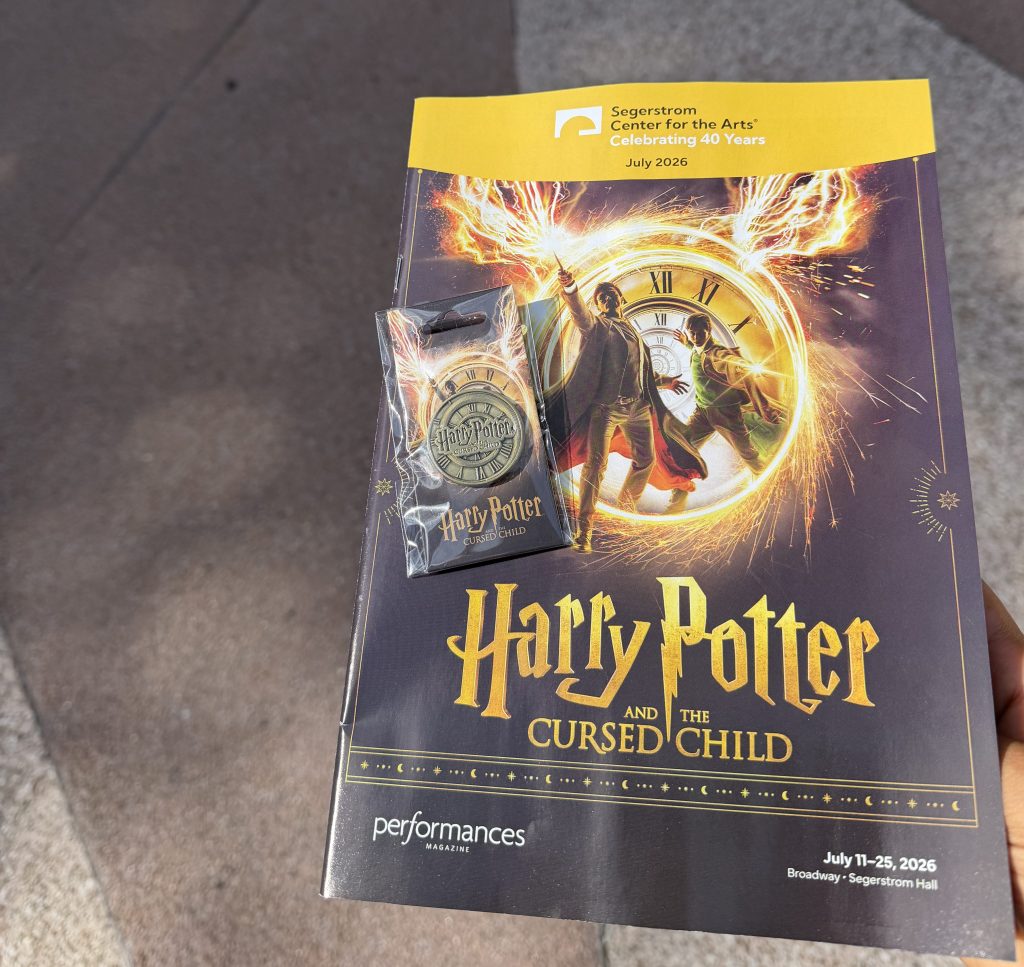
First came the books, then came the films; Now “the boy who lived” continues nearly twenty years later in Harry Potter and the Cursed Child at Segerstrom Center for the Arts. Albus Severus Potter, Harry and Ginny Potter’s son, officially arrives at Hogwarts but struggles to find his place. Unlike Harry Potter, Albus does not like quidditch and finds himself sorted into the house of Slytherin, where he befriends Scorpius Malfoy. Former rivals, Harry Potter and Draco Malfoy must reunite to find their sons who travelled back in time to reverse Cedric Diggory’s senseless death by Voldemort in the Triwizard Tournament.
Under the direction of John Tiffany, Harry Potter and the Cursed Child created a cinematic stage production that left many audiences with a single question: “How did they do that?” From fire spewing out of wands to dementors descending from the air, the special effects become an active character in the story.
Center Stage: Nostalgic, Rhythmic, Cinematic
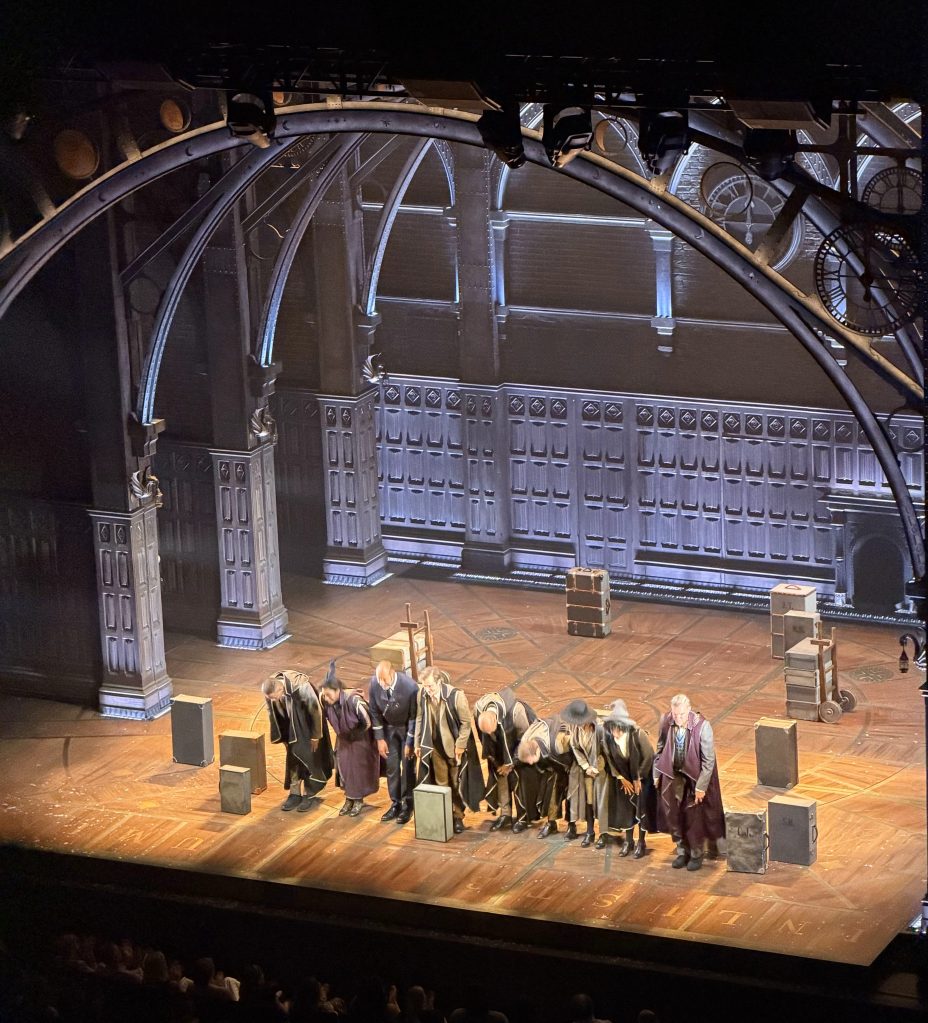
Photo Credits: Destiny Lynn
If Warner Bros. could transfer a featured film to the stage along with the cinematic effects, the end product would be Harry Potter and the Cursed Child. Starring Adam Grant Morrison as Albus Potter and David Fine as Scorpius Malfoy, the play was story-driven as it was technical in timing the music, movement, and lighting for maximum impact. These fast friends form an emotional brotherhood on stage despite their rivaled family history. Albeit fast-talking, witty dialogue that can create challenges to keep up with, their emotional connection was genuine. Particularly as Act I closed, their friendship proved connections could form despite family rivalry.
In coordination with the acting, Jamie Harrison illusions created magic on stage through stagecraft instead of digital projections. By treating the impossibility as routine, Harrison stayed true to Harry’s world of magic through talking portraits, sparks emitting from wands, and quickly turning people upside down from spells. Particularly interesting was how Harrison created a warped 3-D effect across the stage each time the time turner was used to transport to the past or future.
Keeping Score!
While not a musical, the score is integral in transitioning the scenes and providing rhythmic pulses among the interactions. Rather than explicitly expressing the scene through song, the score matches the mood from characters within the scene. Even when the scene concludes, the ensemble moves in rhythm to quickly take set pieces off stage as if they disappeared like magic. Ultimately, the score becomes less background music and more the invisible conductor keeping the entire production moving.
Beyond the Curtain
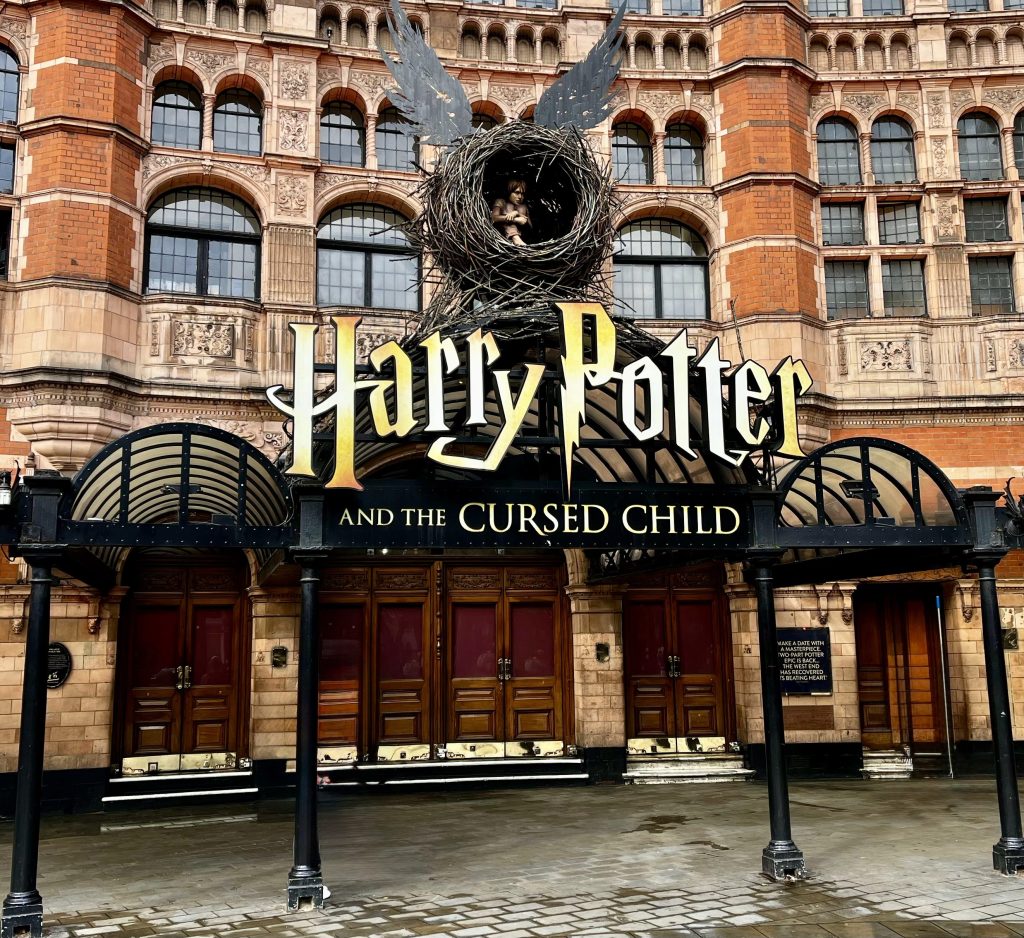
Photo Credit: Destiny Lynn
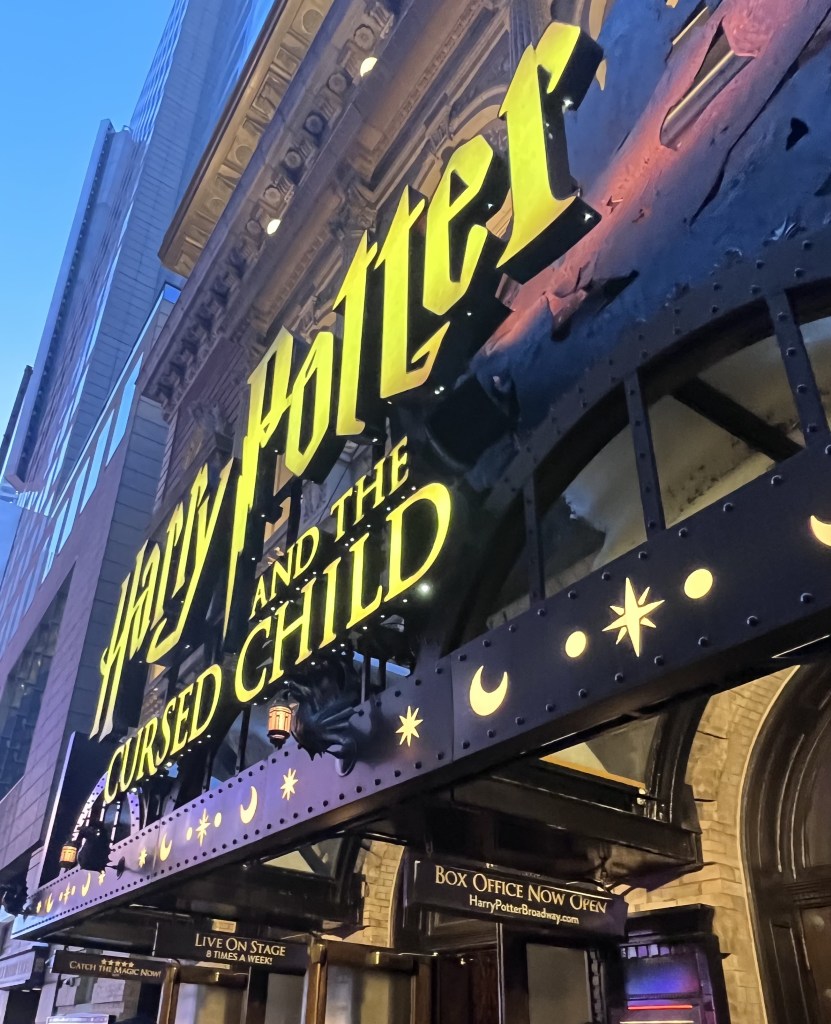
Photo Credit: Destiny Lynn
Starting off as two shows on London’s West End in 2016, Harry Potter and the Cursed Child condensed their performance to one show for the North American Tour. At just under three hours, the story remains faithful to the wizarding world. However, it is not all illusion. The friendships and sacrifices ground the story in accepting a person for who they are, not where they are born into. The friendships between Albus Potter and Scorpius Malfoy, while platonic, echo that of Shakepeare’s Romeo and Juliet in healing rivalries among ruling families. The past happens for a reason, and changing the trajectory in the present and future makes the ultimate impact.
Is This Right For You?
Ultimately, Harry Potter and the Cursed Child intertwines nostalgia and modern creativity with making magic come alive on stage. While providing enough context, it is recommended to read or watch the series before seeing the play to understand recurring characters outside of the main cast such as Cedric Diggory and Professor Umbridge.
Fans of the books and films will enjoy Harry Potter’s continuation as his son balances living up to the “Potter” name and creating a unique path for himself. While seemingly darker in the second act, the play is appropriate across generations. Those unfamiliar with the series may even appreciate this shift in the second act as the story elaborates on action and gothic suspense.
Segerstrom Center for the Arts wraps up the magic by July 25, 2026. However, if you are up for a small east coast getaway, Harry Potter and the Cursed Child is currently on Broadway starring Tom Felton, the original Draco Malfoy in the films, until November 2026. Better yet, venture across the Atlantic to where the play originated and see the show in its two-day performance before the West End officially condenses to a single show performance October 2026.
Takeaway: Harry Potter and the Cursed Child reminds us that the most powerful magic isn’t changing the past—it’s choosing who we become despite it.
Destiny Lynn is a writer who explores the intersection of history, identity, and storytelling through musical theatre and novels adapted to screen.


You must be logged in to post a comment.