
Universal Stage Productions / Music Hall at Fair Park
Director: Joe Mantello
Orchestration: William David Brohn
Run Time: 2 Hours, 30 Minutes (+ 15 Minute Intermission)
Review by Destiny Lynn
Welcome to Shiz University
A good witch and a bad witch, but which is which? More than twenty years after its Broadway debut, Wicked remains one of musical theatre’s defining modern classics. As the North American Tour closes Dallas’ 2025–26 season, the production proves why audiences continue returning to Oz.
For those needing a refresher, Wicked reprises Frank Baum’s original Wizard of Oz story by focusing less on Dorothy Gale and more on how the Wicked Witch of the East and West, along with the Good Witch, stepped into their reputations. Originally written as a book by Gregory Maguire, the stage production removes weighty adult themes into a family-friendly show with a catchy score and bonds that challenge one to stand up to injustice.
Under the direction of Joe Mantello, this North American Tour delivers a strong performance filled with clear vocals and magic to make the stage come alive.
Popular Acting
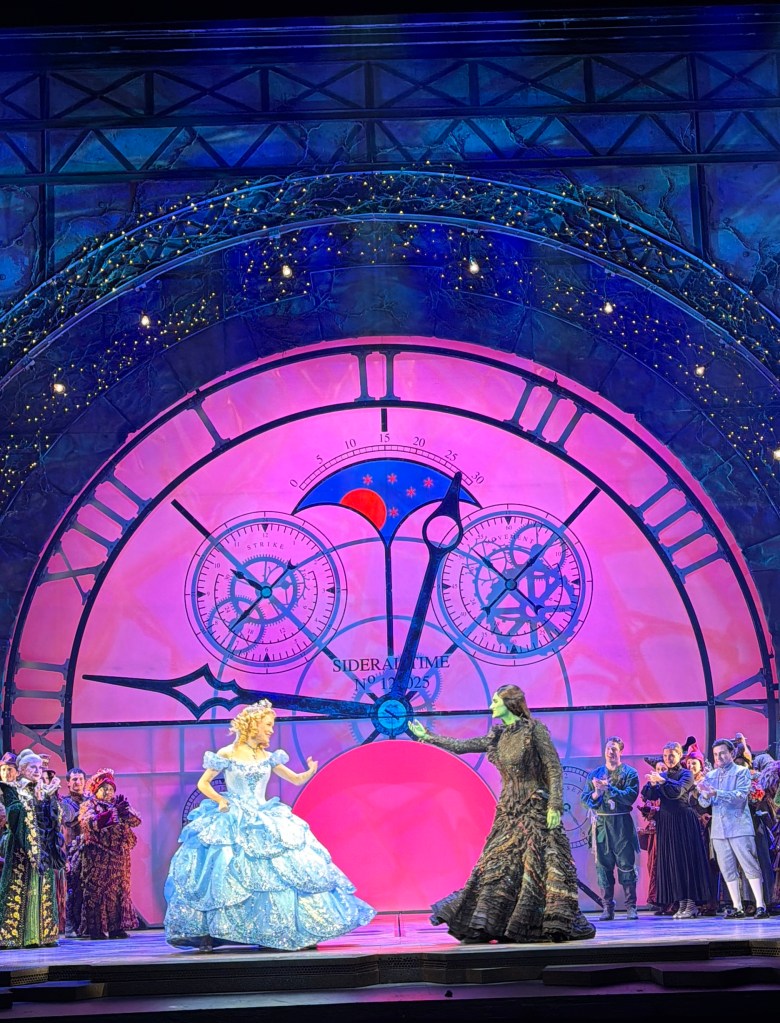
Introducing Claudia Bennett (Glinda) and Aline Mayagoitia (Elphaba), both deliver strong performances while finding subtle ways to add new styles to a familiar show. While starting quietly, almost barely audible in “No One Mourns the Wicked,” Bennett quickly comes into her voice and humor by the end of the first scene. Starting with her essay “Magic Wands: Need They Need a Point?” to officially changing her name from Galinda to Ginda as a form of solidarity for Doctor Dillamond’s arrest, Bennett times her lines for a maximum audience impact. As the story’s foil, Mayagoitia presents a lower register for Elphaba by singing in a lower key. Instead of revealing versatility in her voice early in the performance, Mayagoitia builds up anticipation for “Defying Gravity’s” awaited end that belts and concludes the first act.
Certainly not minor characters, Wicked rounds out the cast with Susan Cella (Madame Morrible), Cristina Sastre (Nessarose), Ethan Kirschbaum (Fiyero), Pablo David Lauceria (Boq), Drew McVety (Doctor Dillamond), and Tom McGowan (Wizard). Where Cella has the attitude to take command of dialogue and song in Madame Morrible, McGowan’s power as The Wizard came through other characters and animatronics to scare the citizens into submission. Behind the physical masks, McGowan demonstrated a simple character who cleverly gets what they want. However, McGowan delivers a convincing moment of realization when the Wizard discovers he is Elphaba’s father. Outside of charm, Kirschbaum creates an almost too quick transformation as Elphaba’s love interest between both acts instead of a slow build leading into “As Long As You’re Mine” in Act II. While there are moments that suggest attraction when Mayagoitia and Kirschbaum save the lion cub, the intensity is slow in Act I compared to feeling rushed by Act II.
Dancing Through Both Acts
While the characters create depth in the story, music and lyricist Stephen Schwartz and the script by Winnie Holzman deserve special accolades in designing a story with clear arcs and conflict that moves the story between both acts. Act I focuses on building essential characters at Shiz University, and there are a lot of them, without rushing the backstories. Rather than feeling overloaded, Act I carefully establishes each major character while maintaining enough momentum to make the lengthy first half feel purposeful. With it come memorable songs such as “The Wizard and I” and “What Is This Feeling.” Characters within the first act do not take away from the central plot of Elphaba finally getting the chance to meet the Wizard of Oz for a talent long shamed throughout her life. By the time dreams are shattered in “Defying Gravity” by the end of Act I, Act II naturally progresses in how Elphaba responds to her new reputation as the Wicked Witch of the West. Meanwhile, the story complicates Glinda’s perception as the Good Witch of the North and turns that crisis inward. However, the story creates a full circle moment that links the second act with the beginning of the first act to reveal an added layer of clever writing.
Defy Gravity and Fly on Set
To round out a show, scenic designer Eugene Lee and costume designer Susan Hilferty elevate the character’s presence. Built around a literal clock, circular curves naturally draw the eyes towards the center of the stage for Glinda’s life-size bubble to emerge throughout the show and Elphaba’s infamous rise at the end of Act I as she slowly flies up the stage. Aside from those major set pieces, the set was simple; however, the costumes were vibrant in blues and greens to emphasize Hilferty’s attention to detail. Dresses on Glinda, Elphaba, and the ensemble are almost armour-like as beads catch the light at various angles.
One Short Performance, One Long Legacy
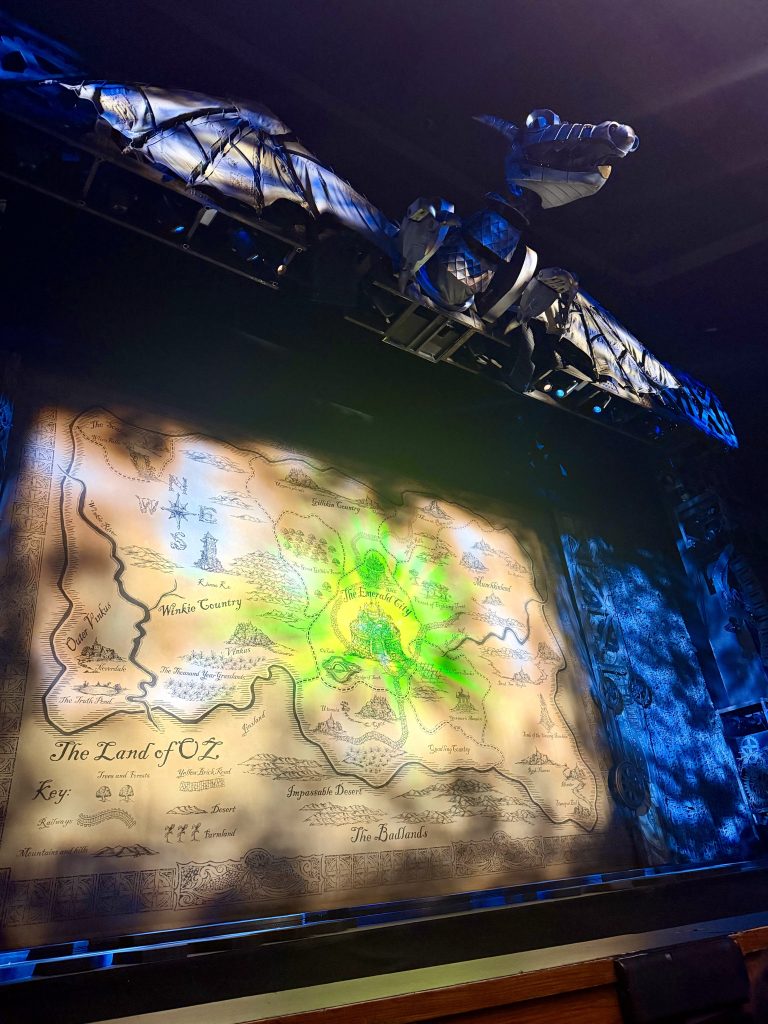
After two decades, Wicked has demonstrated its generational impact as a show that has transferred from book to stage to movie. For long-running performances, it can create challenges to add a new flair to a story audiences are familiar with and expect to see in their characters. This performance added subtle creative changes that worked particularly well for Elphaba in grounding her character. The bonds between Elphaba and Glinda were evident; reaching that point was an emotional journey the audience appreciated through their standing ovation. While Dallas, Texas, may have concluded their season with Wicked, the North American Tour continues its performances on the East Coast through 2027!
Destiny Lynn is a writer and reviewer with a passion for exploring the intersection of history, identity, and storytelling through musical theatre and novels adapted to screen.


You must be logged in to post a comment.